Page 2 of this thread. It's nothing official, just a particular structure of past elements for warmup and it requires you to be able to do all of F2 SLS without going over warmup intensity.
This forum is archived information and is no longer active.
Weighted Lunge vs Single Leg Squat
Started by Alan Tseng, December 23, 2013 · 101 Replies · 6,374 Views
Mark- it seems very peculiar, for example if i lay down, tuck my legs to 90 degrees, do ppt and lower my legs down to touch the floor without reaching a spot where literally my legs do -not- want to go past and for things like doing straddle movemnts i will feel my femur glide out and back into the socket.
if im not on top of my pelvis position it will default to APT.
You're not alone Keilani, I also experience problems with ppt when trying to lay my legs flat on the ground. It requires quite some concentration. I'm starting to think my hope flexors are actually tight although It doesn't really feel like it.
that necesarily isn't the biggest pain though, it also stems to poor mobility in rotation for my glutes as well, I feel as though ever since i started H1, my Trapz woke up and my upper body mobility has been improving in leaps and bounds and my hip mobility is just....well just there.
even when i do mn/PE1, my hip gives me funky clicks and pops, when i stand straight and bring it straight up and then open it in a straddle with my knee pointing up, it just wants to come out of the socket or go in it's own direction, specifically what my shoulders were doing when i learned wall extensions. now they're pretty much on point while on the ground, but any which way i move my legs, i got issues with alignment of my femur within the socket.
Adam R. Durst said:While...I dig myself deeper
I'll try a dig up the research I had seen prior. It was a few years ago, while studying EXSci...good access to journals and requirement to read lots for assignments.
Certainly the bulk of evidence supports your view.
Some of this might be the bias I find in the S&C community, towards strength development. And all with a grain of salt...
-all the best coaches have science catch-up with them...not them chasing science.
-someone once told me the something like 90% of every published scientific finding ever had been disproven or contradicted with another scientific finding at some point.
However, the premise was that while Max Strength is the root of power...at a certain stage of development...the return will diminish, while risk will continue to increase. I've heard Dan John, Pavel, Ian King, Michael Boyel, and Verkhoshansky (author of Super Training, one of the bests textbooks on S&C training) all espouse this view.
Also if you look at the worlds best powerlifters...they are clearly not the best sprinters...and they are the definition of max strength. Olympic lifters are the definition of power and might make it to 5 meters first (assuming even reaction time), but again are not the best sprinters. So clearly max strength does not equal max power does not equal fastest 100-200meter sprint. They are related (hence the scientific correlation) but not linearly.
Power needs to be developed specifically (as a quality and for the sport)...strength is a nessecary, but not suffice requirement. lots of factors contribute to an athlete developing force quickly. Such as Motor control and muscle activation (pattern and % of spindles), type of muscle fiber, and specific development of the muscle through training, including quality and hydration of fascia.
I focus to getting athletes safely to certain benchmarks of strength...and then shift focus more on converting the strength to power. For example getting the power clean to squat ratio as close as possible. Or doing plyometric front squats, depth jumps etc. The standards are sport dependent, but for most athletes a quality full range ~1.5x body weight squat is enough and most of this at higher effective legs loads is single leg work. (Split squats, step-up with loads upto ~bw). And yes we up the load for reduced range such a rack-pull deadlifts or use isometrics in sticking and/transition points.
We wait a fair while prior to introducing weighted plyometric work...even > a year if the athlete has a really low training age
Coach is right that many different training protocols can and do work. And there are gold level athletes that prove many strategies will work. Some better, more consistently and safer then others.
Lots of athletes use machines for max strength development, to reduce risk...we don't use any machines except cable machines, as we like and focus on human movement...and think machines mess up an athletes body awareness and muscle activation patterning.
I've never worked with sprinters (would love too)...but a 2xBW 1/4 squat is very different then 2xBW ATG front squat or full range back squat.
Acceleration is only one part of sprinting as well...??first 20-30meters?? Top speed would rely I'd think more on technique, posture and synergistic body control, speed work and specifically leg return and pre-tensing motor control patterning for foot strike.
Every sport is different...and therefore has different specific training demands...but GPP is relatively consistent.
For AFL athletes...we don't care how much they can max bench...but if they can't bench BW for a couple reps...it throws up a red flag...why? Nutrition? Sleep? Mobility? Injury?
I think to date the bulk of "strength and conditioning" coaches have been to focused on max strength and not enough on injury prevention.
Our athletes get hours of sports specific training that causes imbalances and mobility issues...I focus my effort in these areas...make sure they make it to game day...and don't ruin there life for xx competitive years.
My experience leads me to believe...the best thing an athlete can do is participate and practice their sport. And in the gym, make themselves holistically bulletproof not the 1RM king.
There is no training more sports specific...then the sport itself.
I like these discussions...training philosophy.
As for Sissy Squats...never used them, so unsure.
We often use "shoot-lunges" for our volleyballers to train powerful quads...so they can move forward fast and low in the sand. Comes from shoot wrestling and is a powerful forward lunge staying super low and moving over the front foot...almost dragging the rear leg under.
Wow...apparently I had an opinion and nothing better to do...sorry for the massive response...I guess making up for a bruised ego
No no that was awesome and thanks for your input. I'm just looking at this from the perspective of chasing two goals to which I do strongly believe there is a specific list of exercises rather than a particular tempo/rep scheme I'm looking for which seems to be again within a 5 rep range and strongly attempting to adhere to that.
It kept making me think "this reminds me soo much of power lifting" but then again since the direction were aiming for gymnastics is explosive by nature, I then thought Oly lifting was the another way to go...or at least so I thought.
I was thinking squats are a definite possibility because after examining that technically speaking with the pistol squat, we ARE going ATG...but on a single leg...so what's to say that you could continue on with that, but dividing the volume up first thing in the day and doing gymnastics later on so that performance from either doesn't falter? Because...isn't the point to try to make sure the upper body is strong ENOUGH to support the lower body IF you WERE to have bigger legs for cosmetic reasoning/ other sport pursuit to support from doing the gymnastic based skills?
Of course the strength from the leg training will be there from first doing foundation then possibly moving on to Oly lifts and Squats for further progressions....once mastered..
I was thinking the staple should be most similar to the curriculum's furthest progression with Bulgarians Split Squats first and foremost (if you can do them already along side great form with pistol squats),
then..Oly Lifts as the next accessory movement done in moderation as that specifically seems to be the strongest carry over for "functional" aesthetic pursuit that has a literal explosive purpose,
..and ..Squats with 1/4 to 1/2 reps done exclusively in again an explosive manner as another supplementary exercise would be last on the list and done only so often. (I may have to study the Eastern Block, Wendler's material, and a couple notable other weight lifting coaches materials carefully here to really back up my philosophy and possible setup to see how it would work with handful of willing people to guinea pig on with a template I'm working on..)
As much as I would love to include deadlifts on the most promising lift list as I do love to hoist me some metal with a past goal of deadlifting 600lb one day; the gymnastic back limber and ring work seems to cover any need or want of deadlifts entirely. The stimulus from that is just perfect alone...though I did think that it wouldn't be a complete remote possibility to add weight to assist with further strength with pull ups, chin ups, and perhaps hand stand push-ups once mastering the hand stand series..
Coach Sommer said:- Of course, as Epke is not that good on either floor or vault, that training video might be construed as making a case that squats have an adverse effect on tumbling.
- All kidding aside, I have already pointed out several programs which have employed heavy squat variations and several which have not.
- It should also be pointed out that most sprinters use either a 1/2 or 1/4 squat; not ATG.
Yours in Fitness,
Coach Sommer
Thanks Coach.
Even with these gems spotted out, I'm just going to really need to read some more studies supporting my case as well as just talking with other S&C coaches. The more data, the better so I could make an objective conclusion on it...plus..finally weight lift without fear again aha.
The safest way for now I'm seeing is just separating them in two different parts of the day or week microcycle so that extra leg work doesn't have a negative weight gain caused from it affecting current progressions into GST...and kept to an absolute minimum of perhaps just once per week. I'll keep you updated.
Honestly Keilani I have been coming up with such similar issues. Thanks to h1 I'm sure of it my shoulders have improved ridiculous amounts I feel strong stable and mobile with them now but my hips feel tight weak and I get some clunks and pops as well as occasional pain in them from certain moves. I have started focusing on correct posture while standing and sitting as well as just walking. For example I really try to walk in a way that activates my glutes more and stretches my hip out a bit more. I am hoping that foundation will help sort me out but i think I need to progress further to see any real results like with h1 once I reached pe5-6 that's when I really noticed the difference.
Kit seems to have a lot of stuff on activating the glutes and hip mobility I've just started looking in to.
I think many variables needs to be considered in lower body training
1. the 3 type of foot positions: parallel stance (Squats, Deadlifts), staggered stance (Lunges, Bulgarian Split Squats), single leg stance (pistol squats, single leg deadlifts). All 3 feet stance plays a role in the gait cycle
2. Hip Dominant Exercises vs Quad Dominant Exercises. Most people nowadays are quad dominant when glutes are the stronger muscle. Focus more exercises on minimizing knee involvement, eg. hip dominant squats/lunges/Bulgarian Split Squats vs knee dominant squats/lunges/bulgarian split squats. Though that's not to say you shouldn't do a knee dominant squat at all, it's still a basic movement pattern. But point is, people do too much knee dominant exercises.
3. Olympic lifts aren't the end-all-be-all of explosive exercises. eg. Push Press (knee dominant explosive), Swings (hip dominant explosives). Speed is also an equation to power (power = strength x speed), eg. squats with weights at high tempo reps. Other things to consider are the difference between jumps, hops, and bounds (jumping with 2 feet, and landing on 2, jumping with 1 and landing on 1, alternating etc.)
4. Coach Sommers mentioned 1/4 squats performed by sprinters. I always consider it interesting that we perform A LOT of athletic movements at 1/4 squat depth like running. 1/4 squat is basically our "athletic stance", eg. swinging a baseball bat or playing defense in basketball. So wouldn't 1/4 squats be "functional" then?
5. Speaking of swinging a bat, running should be considered as primarily a transverse plane. The body is rotating one way to the next with each step, the contralateral patterns of arms/legs, the interaction of the Anterior Oblique System and Posterior Oblique System etc. Yet, many exercises we see prescribed eg. Squats, Deadlifts, Cleans etc. are done bilaterally (parallel stance), with no transverse plane involvement. That's why I like kettlebell swings. Besides doing it bilaterally and 2 handed, theres many variations. Eg. bilaterally and 1 handed and involve trunk rotation. Staggered stance and swinging it 2 handed from forwards to backwards to involve the transverse plane rotation etc. Naudi Aguilar is one person that made me seriously think of running in the transverse plane
Gym work is supplementary to your sporting endevours. There seems to be a trend to over complicate and over think gym training as it applies to sports. Sure a few things can be tried but if you are training seriously for a sport you will more then likely have a lot of the speed and power work, with the proper patterns and velocties covered which then just leaves the low velocity high force stuff developing tendon stiffness, force and strength in the gym which is stuff you probably can't tick off with your sports practice. Sometimes we loose sight of the purpose and what we can achieve with weights and go down a track in which we may use them less optimally then for what they are suited.
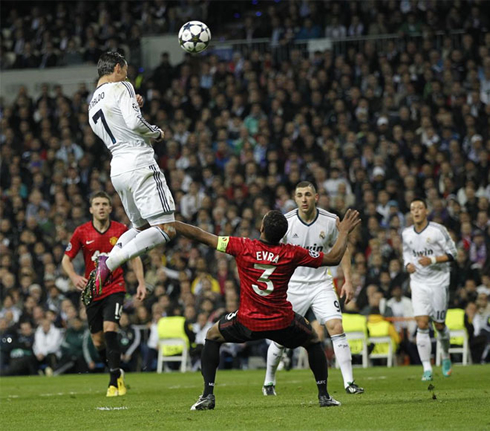
coach as u already mentioned your athletes are pretty good jumpers. did u ever try to measure their jumps? am asking this, since i came across to this video about cristiano ronaldo ( one of the top 5 complete athletes in football for sure ) and his general ability. to cut this off, these guys measured his 2 jumps: the first one was from standing without using hands, and the other one was using movement same as he can use it on the pitch, without restriction.
1st one: 44 cm
2nd one: 78 cm
do u think your athletes can over jump him?
between 12:30-13:40
http://www.ronaldo7.net/gallery/game/13_02_2013/ronaldo1.jpg
I would imagine so, as those were only modest jumps by GST standards; although I'm sure that they are outstanding for a soccer player. As a part of their conditioning, my athletes regularly jump up onto boxes that are from chest to head high.
Yours in Fitness,
Coach Sommer
p.s. The first variation they made him do was asinine and quite literally a waste of time. It measured nothing and demonstrated even less. No one, anywhere in the world of sport, jumps with their hands on their hips. 
The entire purpose of a jump is to generate power using the body as an integrated unit. In my opinion, this was literally nothing more than smoke and mirrors in an attempt to impress the yokels.
p.p.s. I would also like to say that I very much enjoyed the slo-mo footage of his ball handling. Looked so smooth it was almost like magic. 
Quick question on this Coach, have you measured your athletes jump via the height their head travels vertically as in the video. Reason I ask is that the video appears to demonstrate his head vertically travelled 78cm. This is significantly different to a box jump where typically athletes will land in a significant squat position, basically utilising a very fast leg movement onto a surface and minimising vertical travel of their centre of mass - very efficient but not the same as Ronaldo's head (and thus the body thats attached to it) travelling the distance he did. Thanks in advance for your response,
Craig
We have in the past, but it has been many years ago now. Essentially all of the athletic trainers who measured my athletes, eventually adopted the attitude that gymnasts weren't human and hence didn't count because the gymnasts' results were screwing up the graphs when included in all of the data from the other athletes. 
Gymnasts have always been the outliers in the strength community. For example the pound for pound all time strength records at the Univ of Nebraska in the squat, bench and CJ are all owned by gymnasts; not football players or wrestlers as one would expect. And this despite the fact that the gymnasts rarely lifted. However as it couldn't be explained via conventional strength thought, it was easiest to simply pretend that it didn't exist.
Yours in Fitness,
Coach Sommer
that's so rad.
no wonder the roman empires soldiers were so amazing....this is a part of history I wouldn't mind reading up on.
Coach Sommer said:We have in the past, but it has been many years ago now. Essentially all of the athletic trainers who measured my athletes, eventually adopted the attitude that gymnasts weren't human and hence didn't count because the gymnasts results were screwing up the graphs when included in all of the data from the other athletes.
Gymnasts have always been the outliers in the strength community. For example the pound for pound all time strength records at the Univ of Nebraska in the squat, bench and CJ are all owned by gymnasts; not football players or wrestlers as one would expect. And this despite the fact that the gymnasts rarely lifted. However as it couldn't be explained via conventional strength thought, it was easiest to simply pretend that it didn't exist.
Yours in Fitness,
Coach Sommer
I get this all the time. Even with my relatively meager accomplishments everyone I walk into a gym (especially crossfit) I am told I don't count because I have some gymnastics experience.
I hess they didn't see me less than two years ago at my first GB seminar  . That was an awakening for me.
Coach Sommer said:Love deadlifts. However we have only ever used them as a part of our warmup; and never for max strength development per se. Most people abuse deadlifts by attempting max pulls far too often. My students had to beg to add weight. I generally had them continue using the same weight for at least four weeks, preferably six to eight before I would even consider adding more weight.
I recently re-instituted these with Heath. At a bodyweight of 110lbs he began with 135lbs following Allan's protocol outlined below. After approx 10 weeks Heath increased the weight of his warmup deadlifts to 185lbs in a single jump which he was surprised to find quite comfortable.
When Allan was young he did deadlifts (building up to bdywt and 1.5 bdywt) everyday as a part of his warmup. He did these SSC style with no warmup. One set of three, then shoulder mobility work (approx 5 min worth) then a second set of three before heading on to more advanced shoulder mobility
He was however young at the time, so with the height of the bumper plates on the bar it was closer to a rack pull for him than a true deadlift.
Yours in Fitness,
Coach Sommer
I'd like to bring these into my regular warmup. What would be appropriate weight to begin with; I'm thinking easy 2x3 bodyweight for a cycle following this template given that I'm training GST 6 days a week? (4H+ 2F?)
wow. i am also curious what kind of deadlift is this because honestly there are a lot of people claiming their "deadlifts" to be the right one (romanian,sumo,conventional,etc) and hopefully it won't lead to unnecessary leg hypertrophy.
P.S. thank you for gymnastics
I also like the idea of a warmup with deadlifts & extra shoulder mobility... I already do the lower-level SLS>iM's, which make for a great warm up! What else is good before a foundation workout? Would pike & bridge work, deadlifts, shoulder mobility, & SLS>iM's cut it?
So I've decided to institute 2x3 snatch grip deadlifts, which I've put at 60kg (could just be because I pulled heavy for me yesterday, but I felt I had to work too hard to bring up 80kg with this grip to use as a warmup 6x a week). Figure if I can get the warmup + extra traps work with a lighter weight then I come out ahead, given that building a good dl is not my goal.
Might consider bumping it up to 80kg after a cycle or two, keeping in mind Coach's comments on keeping it light. Will go with this unless I hear different from those in the know
Jon Douglas said:So I've decided to institute 2x3 snatch grip deadlifts, which I've put at 60kg (could just be because I pulled heavy for me yesterday, but I felt I had to work too hard to bring up 80kg with this grip to use as a warmup 6x a week). Figure if I can get the warmup + extra traps work with a lighter weight then I come out ahead, given that building a good dl is not my goal.
Might consider bumping it up to 80kg after a cycle or two, keeping in mind Coach's comments on keeping it light. Will go with this unless I hear different from those in the know
If you want the traps do snatch grip pulls. At the end of the movement go up on the toes and finish with a shrug. At the top you should almost fall forwards. Make sure you don't set up like a deadlift though as this is an olympic weightlifting exercise. Also make sure the bar is in line with the ball of the foot rather than pulled back to the shins. Clean and snatch pulls is the exercise that gives Olympic lifters their big traps and back extensor.
Mark Collins said:If you want the traps do snatch grip pulls. At the end of the movement go up on the toes and finish with a shrug. At the top you should almost fall forwards. Make sure you don't set up like a deadlift though as this is an olympic weightlifting exercise. Also make sure the bar is in line with the ball of the foot rather than pulled back to the shins. Clean and snatch pulls is the exercise that gives Olympic lifters their big traps and back extensor.
Appreciate the tips, and yes, very much intended for traps emphasis lagging spot on me.
Will run through this with my local CF coach who is a cert'd lifting specialist too.
Coach Sommer said:Years ago, I once had Allan working jumping bulgarian split squats with only the front leg jumping off the ground, the rear foot up on a bench and using dumbbells for resistance.
These are very potent and we had to be quite careful with them; Allan quite convincingly conveyed to me that they were going to pull the hamstrings right off his legs if I worked him too hard.
Yours in Fitness,
Coach Sommer

So I've decided I want to try these (probably without the jump at least at first) rather than the 150% BW lunges I had scheduled for this week. Bit leery of that weight on my shoulders/traps. I will do some testing to find an appropriate weight, but does anyone have any experience with them to give me a starting point? I have access to plenty of dumbbells heavier than I will ever need.
I did split squats for a few weeks but not enough experience to impart any knowledge. it does shed an unforgiving light at R and L leg differences. I was doing them with a 20kg bumper plate as a platform because a higher box kind of aggravated the front of the hip.
edit: unweighted split squats, btw
I am running a bit of an experiment for the remainder of the year by adding 1* a week rack pulls (2-3*3r steady state 8-12 weeks) to my split squats (following Foundation 12 week programming to stick with a weight while upping reps slowly and sustainably) Currently running week 5 with 70kg and feeling good about it.
Not sure how much I rack pull as I tested a set of three at 80, 100 and 120kg yesterday and had no issues. Higher weights to follow. Doing these for the extra traps stimulation and the faster recovery compared to full rom deadlifts and i like the combination of heavier pull with unilateral squats
I am currently alternating the squat sets with weighted archups-- comfortable with 25kg and looking to up it this week to 30-- done no rest Foundation style. I may look at upping the weight more aggressively on the squats (being reasonably conservative at the moment, could go somewhat heavier), taking rest periods, and dropping the weighted archups given the heavy lower back element in the pulls. I am performing unweighted archups for higher reps 3* a week in str day warmups too. Appreciate the voice of experience on this one
Otherwise I will update on how this goes as news comes in
This might be a stupid question but I've been wondering ever since I saw the split squat, how do the athletes get the bar on their back? Do they just dead lift/overhead press the weight?