This forum is archived information and is no longer active.

Deep squat mechanics... I just don't get it!

Started by Lisa-Jayne El-Sour, March 27, 2016 · 33 Replies · 964 Views

Lisa-Jayne El-Sour

For the life of me I just cannot squat.

Below I compare my squats with a photo I found on the Internet.
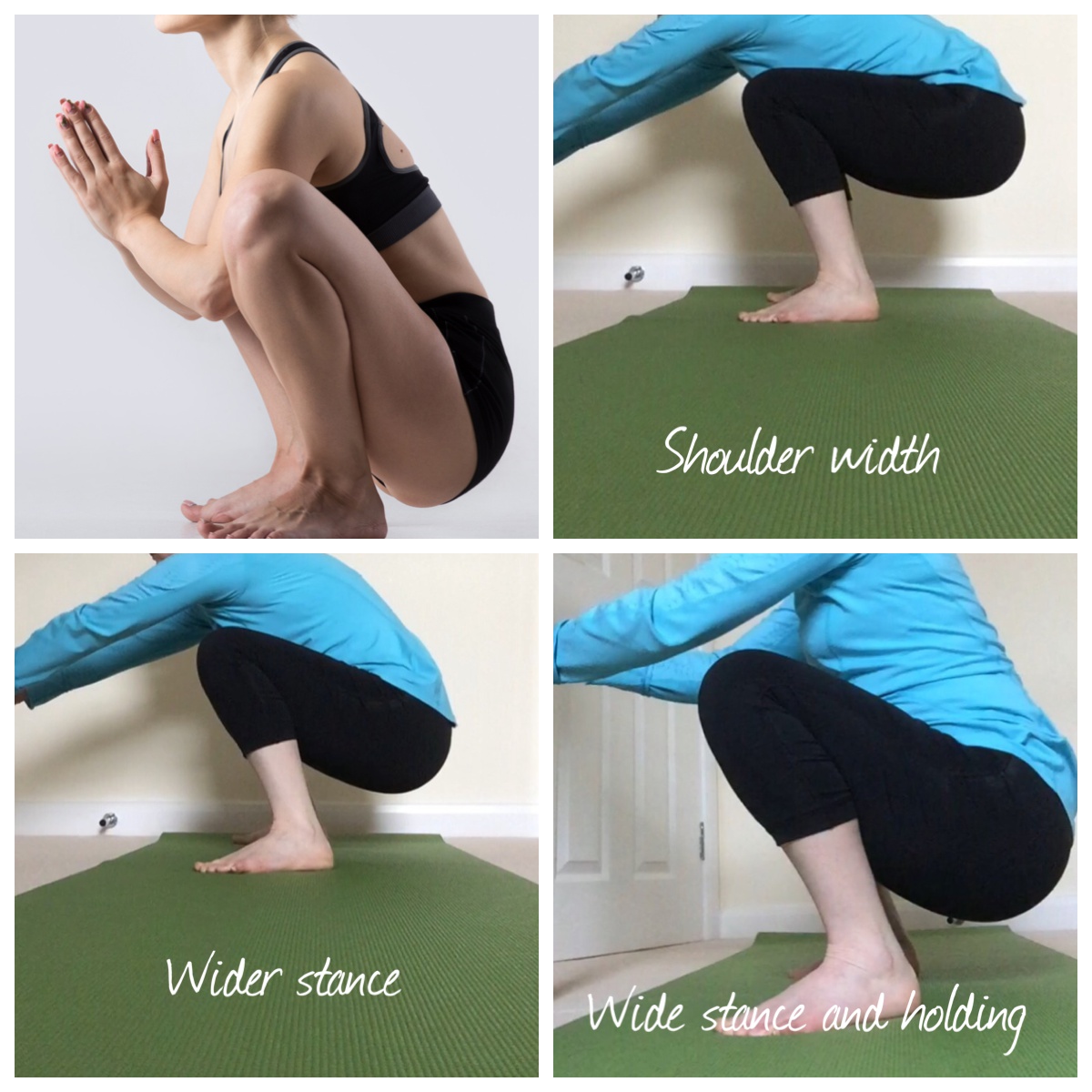
image.jpeg

I can squat lower with a wider stance, but I can only sit upright if I'm holding something. If I let go, I fall backwards. This is wide stance from front:
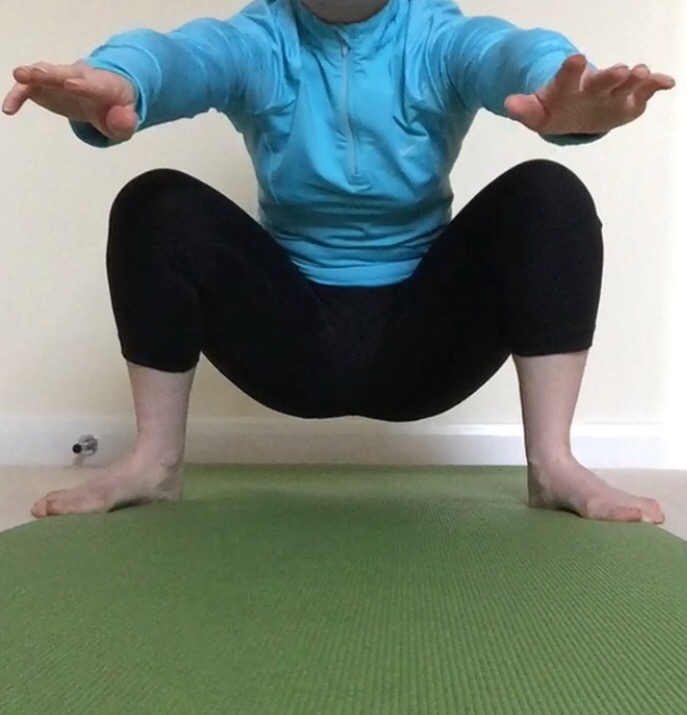
image.jpeg

Ankle mobility is often said to be the culprit. If this is the case, how come the girl can squat with hardly any angle in her ankles? Nevertheless, I've worked on ankle mobility. Do I still need to improve?
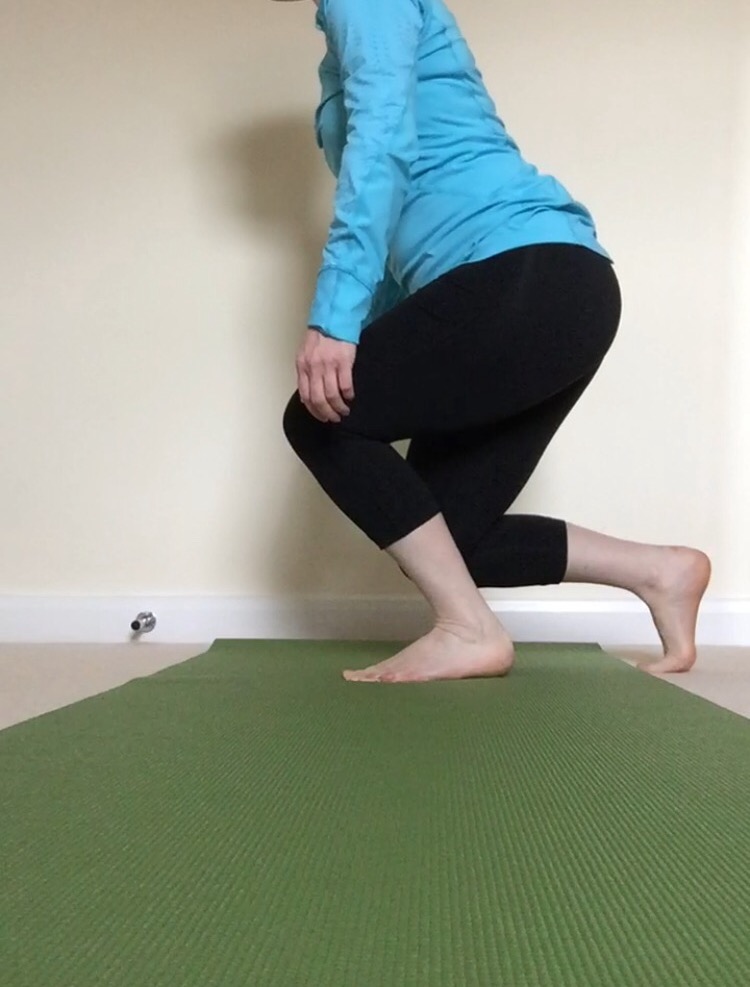
image.jpeg

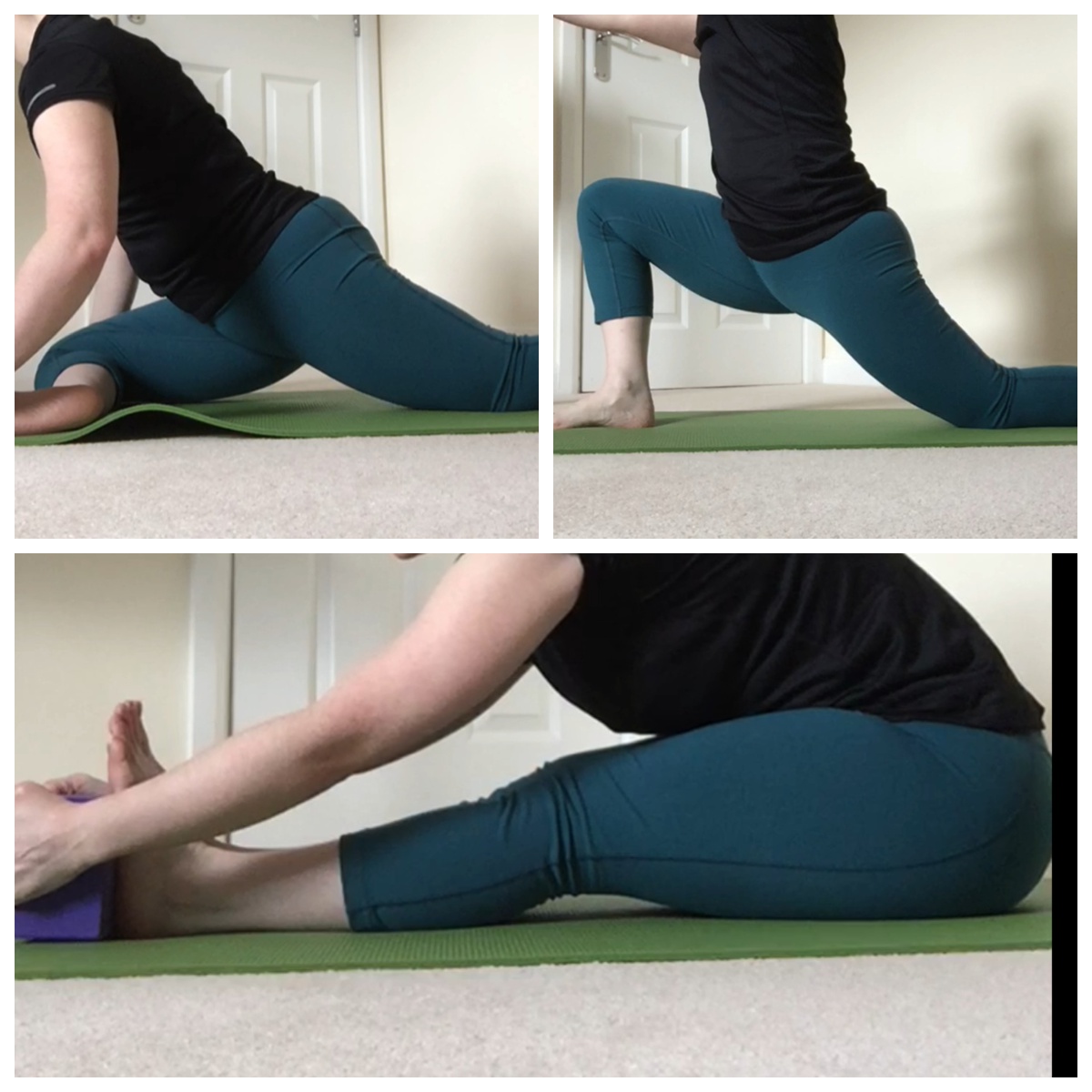
I'm working on hip mobility now. I have good flexibility with lunges, but there does seem to be some tightness in the groin (sorry, not great with anatomy), e.g. with frog stretch. Could this be the problem?

I'm concerned that I can't reach anything like the girl's squat even when I'm holding something. I can't get my head around where my squat is going wrong or how I can ever get into the same position.

Will I ever be able to squat?!

Maksis Riley

Bear in mind that the proportions of your body will always play a part in your bottom squat position. It may not be possible for you to have a squat that looks like the example you posted.


However to help the depth of your squat I think it will be flexibility in the rotators of the hips and knee flexion holding you back. 


Luckily, you really don't need to worry too much about identifying the specific issues. If you're following foundation and the stretch courses the problems will be addressed at some point and you'll find that your squat improves as a consequence. This is the beauty of GB curriculum in my eyes; it is preparation of the entire body's structures and so much more than just "a way to get a straddle planche" or any of the elements. And this is why it's so important to work every progression with a relentless focus and determination to squeeze what you can from each and is also a point that can take some time to learn and truly appreciate.


So anyway, hips and knees as I see it Lisa but don't be concerned; it will improve :)


Max

Daniel Taylor-Shaut

Front Split Series and Single Leg Squat progressions will remedy this. It's the exact thing which they work to fix. Ankles, hips, knees, calves, will all gain ROM.

Eduardo Paul

I think your mindset is wrong from the beginning when you compare yourself to this girl. She has a different anatomy than you do. Everyone has a different body type for that matter, so it's unreasonable to think everyone should squat the same. So I would advise you to first stop having the goal of "squatting like this girl, or that guy."

Now that said, I would guess you have a limitation in hip mobility which prevents you from balancing when you try to flex your knee further. But I'm not a specialist in anyway, so this is just a guess.

Mark Collins

How much time do you spend in the deep squat through the day?

Christian Nogueira

To my untrained eye, by the way your back rounds it looks like you have some hamstring tightness and maybe some adductor tightness (looks like your not shoving your knees out in the squat). Ankle flexibility looks fine, as in your squat you are not near the limit of your ankle flexion.

In principle your foundation work will make this gradually get better. Have you any previous training experience ?

Alessandro Mainente

Reasonable importance has the bones proportion, you tend to have long upper leg so you need to compensate with a lot of forward knees movement.

http://www.sensational-yoga-poses.com/images/pistol-one-legged-yoga-squat-1.jpg

Look carefully where are your knees are compared to the photo below.

A good way to test ankles mobility during bent knees work is doing single leg squat or full squat with knees together and see how much low you can move your butt.

there is one important factor. during squat the position is stabilized on the ankles and the weight should be felt on the posterior and external part of the foot .

and here there is the problem: during squat with shoulders or less stance the soleus must be squeezed to stabilized the weight on the heels but also you need to stretch the soleus and achilles tendon in order to move the knee forward . if your soleus is tight how you can pretend to stretch it when is squeezed? it is a dream. pick up the front split series and stretch your calves daily. I've improved my horrible knees together squat only doing the soleus stretch of stretch series (I was able to reach barely the horizontal position with upper legs).

Ville Pelto

Here is how you squat: Start up by pointing your toes slightly outwards(this activates glutes). Then break at the knees. Then sit back. Boom, perfect squat!

Ronnicky Roy

Definitely flexibility in your hips.

Alessandro Mainente

Think about this way guys: if you can show all the major mobility poses and you cannot yet perform the full squat with knees together you cannot have hips problem. period.

I'm am the clear axample of that, I can do bridge, side split, almost front split both sides, 90° pancake a side split pancake, my hips are completely loseness.

but I cannot squat at shoulders stance or less under horizontal position. this is a clear axample of how hip has nothing to do with the ability of squatting with feet closer. In my weigthlifting gym (where people learn back squat, front squat, snatch, clean and press) we do a simple correction : put something under the heels of approximately 2-4 cm . if now you can squat perfectly it is an ankle problem. Adults in my gym have horrible groin flexibility but they can do decent squat, then I've tested their ankles mobility, result: by far more more more more better then me.

I do not think we need some more personal opinions about that, so please keep them away.

Lisa-Jayne El-Sour

Thanks for all the replies everyone! I really appreciate you all helping me out, but may I say how much I love you Alessandro!!! :D Your replies have really, really helped me!
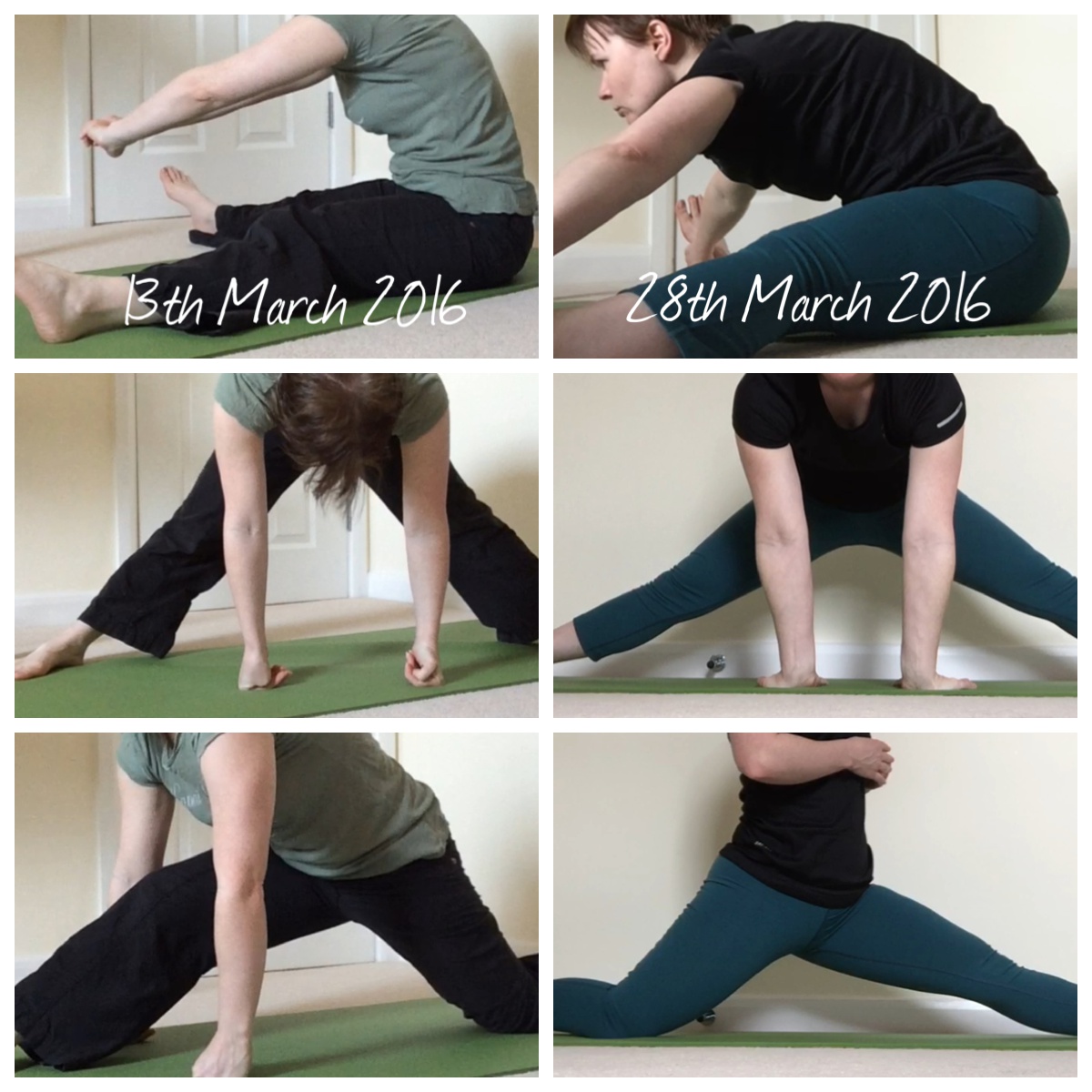
I didn't mean to compare myself to that photo as such, but having a scientific mind I was trying to understand how that position works for her (and countless other people on the internet if you do a quick search) but not for me. Flexibility is frequently given as the reason that people can't squat, but I have worked on my flexibility every day, seen improvements, and yet I still can't squat. This is where my consternation arose.

I have been stretching daily. Some of the stretches (such as ankle stretches) I do twice, even three times daily. Here is my progress over the last 2 weeks - I was really tight before!

IMG_0240.JPG

Here are some more examples to demonstrate where I am with my flexibility.

IMG_0241.JPG

I know I've still got a way to go with my flexibility, but I'm certainly more flexible than my husband and yet he can squat (grr).

I did think my ankle mobility was the factor and seeing the picture Alessandro posted has helped me fully accept this. I will keep stretching, but ankles will continue to be my biggest focus.

Thank you, thank you, thank you!!!


Alessandro Mainente

Progress on ankle flexibility are very slow due to the high connectvive tissue component in the tendon and soleus, also consider that everytime you walk and you support the weigth over a bend knee you are shortening the soleus. Approximately in one year of dedicated stretch for soleus I've improved ankle dorsiflexion of 10° degreese.

Daniel Taylor-Shaut
51 minutes ago, Alessandro Mainente said:

Progress on ankle flexibility are very slow due to the high connectvive tissue component in the tendon and soleus, also consider that everytime you walk and you support the weigth over a bend knee you are shortening the soleus. Approximately in one year of dedicated stretch for soleus I've improved ankle dorsiflexion of 10° degreese.

It took you one year to gain 10 degrees of ROM? That's sobering, but guess it's better than 9 degrees. It's all relative.

John Cunningham

I ruptured my right Achilles' tendon years ago. My flexibility is so much better on my right side now, I can sit in the squat position on my right heel but not my left and can barely get parallel on the full squat. So I would definitely endorse ankle flexibility as the key to the squat.

Alessandro Mainente
2 hours ago, Daniel Taylor-Shaut said:

It took you one year to gain 10 degrees of ROM? That's sobering, but guess it's better than 9 degrees. It's all relative.

Yes Daniel, unfortunately I had different ankles sprain back in the years during gymnastics activity and scar tissue is very hard to strech. A normal person could resume about 2-3° every 3-4 weeks, that is not bad.

Daniel Taylor-Shaut

Yeah, my main issue is thoracic extension and overhead flexion. But ankle flexibility is lacking, too. Your post just reminded me to limber these areas more frequently so that I don't have to do as much makeup work when I do the Stretch Series and Foundation >ims

Travis Widmann

I have the exact same issue with the squat. I know it's an ankle issue because when I wear boots I can get a great squat position with knees in my armpits and an upright back, but barefoot it's hopeless. Gotta refocus on this myself, progress is slow indeed. SLS attempts are going to be embarassing without loosening up the ankles.

Mark Collins

Most people have tight ankles because they walk around in positive heel shoes everyday. No amount of calf stretching will beat the shortening adaptation of wearing positive heeled shoes.

Most people that have a terrible squat also spend no time in a deep squat. For many cultures deep squatting is not an exercise it is a position of rest. Us westerners were good at squatting as young children until we found the comfort of a chair. 

Ditch the chair and rest in the squat even if it is for 10 secs. Use a towell under the heels if you are tight. As you improve reduce the thickness of the towell until the feet are flat.

Daniel Taylor-Shaut
4 hours ago, Mark Collins said:

Most people have tight ankles because they walk around in positive heel shoes everyday. No amount of calf stretching will beat the shortening adaptation of wearing positive heeled shoes.

Most people that have a terrible squat also spend no time in a deep squat. For many cultures deep squatting is not an exercise it is a position of rest. Us westerners were good at squatting as young children until we found the comfort of a chair. 

Ditch the chair and rest in the squat even if it is for 10 secs. Use a towell under the heels if you are tight. As you improve reduce the thickness of the towell until the feet are flat.

What about putting a block under your butt and your feet flat? Same effect or not as good?

Alexander Egebak
13 hours ago, Alessandro Mainente said:

Yes Daniel, unfortunately I had different ankles sprain back in the years during gymnastics activity and scar tissue is very hard to strech. A normal person could resume about 2-3° every 3-4 weeks, that is not bad.

Alessandro, can you tell me more about your ankle sprain?

I have ankle problems which does not seem to go away by itself. It is basically the achilles tendon being crunchy when it is completely extended and when it is completely contracted. My right foot has better range of motion during calf raises, and if I force my left foot to level with the right one I feel irritation and "crunchiness".

Mark Collins
7 hours ago, Daniel Taylor-Shaut said:

What about putting a block under your butt and your feet flat? Same effect or not as good?

The end result should be the same.


Alessandro Mainente

MY type of ankles sprain always involved the inversion and not the eversion. I had my last sprain 4 years ago during the Helsinki seminar, why? because sometime sxxt happens! from here i've never fully recovered, I can tumble of course, basic front and back work but not on hard surfaces or for several attempts. Basically my ankle starts to be fatigued very soon.

the left one has more injuries compared to the left and it is the more locked. 

http://www.epainassist.com/images/Article-Images/ankle-sprain.jpg

Mark Collins
20 hours ago, Alessandro Mainente said:

Progress on ankle flexibility are very slow due to the high connectvive tissue component in the tendon and soleus, also consider that everytime you walk and you support the weigth over a bend knee you are shortening the soleus. Approximately in one year of dedicated stretch for soleus I've improved ankle dorsiflexion of 10° degreese.

This is typical progress for dedicated people. Alot of people have stiffness in multiple areas over their body. This can be why it takes some of us broken people a long time to get through particular foundation exercises.

Jon Douglas
1 hour ago, Mark Collins said:

This is typical progress for dedicated people. Alot of people have stiffness in multiple areas over their body. This can be why it takes some of us broken people a long time to get through particular foundation exercises.

Not wrong... ;)

Eduardo Paul

After reading Alessandro's post talking about proportions, I remembered these videos I had seen a while ago. Although he just briefly mentions the dorsiflexion, he discusses the whole body proportions in the squat. It's quite interesting.