This forum is archived information and is no longer active.

Shopping for Greek Yogurt

Started by Sensei JP, February 6, 2016 · 32 Replies · 899 Views

Adrian Theopold

I like the question, as I was asking myseld the same.

Regarding turkish yoghurt I think it's basically the same + cheaper if you buy them from turkish stores. I'm sometimes a little bit unsure regarding the ingedrients as the labels are sometimes wrong when imported. I actually find "greek yoghurt" very rarely only "yoghurt greek style" which is due to law issues in germany I guess.

I was wondering where the difference is between "greek yoghurt" and full fat yoghurt with added cream? In some cases the greek one is strained, but otherwise than that I don't see any difference.

I will probably stick to buying ecological full fat yoghurt as it tastes better in my opion, that non eco "yoghurt greek style". And adding cream isn't that hard in any case.

Regarding "quark" I'm not 100% sure whether it's that good... (it's definitely not bad). But one good reason to eat yoghurt are the living cultures in it. I think here it depends on the production method whether there are still many in the quark or not. One big plus for the yoghurt is, that you simply add some bacteria and don't do much afterwards so that all the nutrients that are in the milk are still there while the bacteria transform some of the whey into protein. For quark you seperate whey from casein by lactid acid which might come from bacteria or rennet, so I think there is some loss here.

By the way, google tells me that the translation for "quark" should be food curd. Also I'm not 100% regarding the information above, maybe there is some dairy expert around here to clarify things.
Jeff Serven

I dont know what "Quark" is Ill google it. Is it a yogurt consistency or something like a triple-crème cheese? 

I agree with Adrian. 

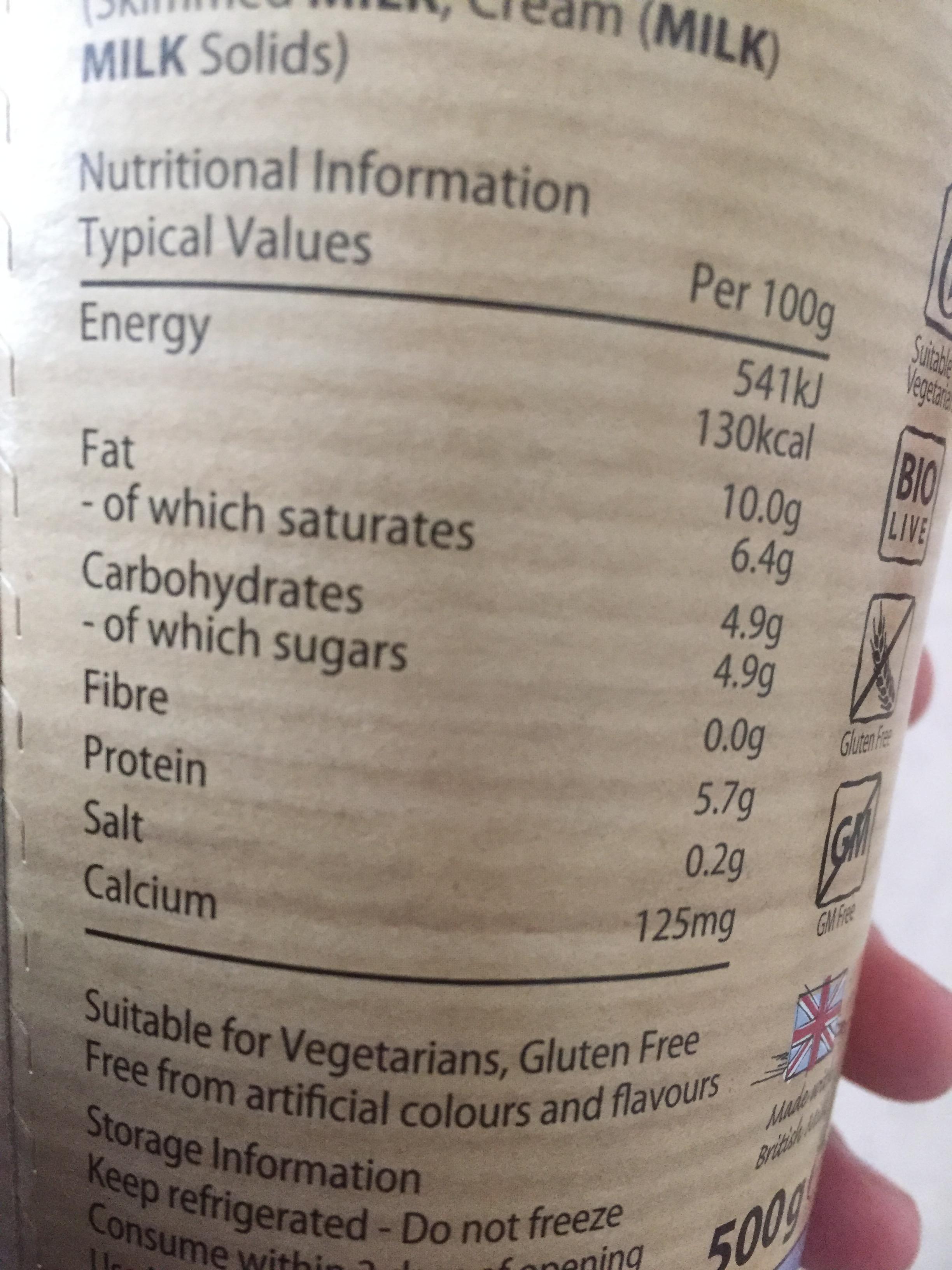
Lets get the the bottom of the yogurt thing. In America - "Greek" yogurt is about the only way to get a real yogurt. The rest of the stuff we have available to us is high fructose corn syrup mix. The macro breakdown you gave above looks like a good yogurt choice. It needs to have roughly twice the fat as carbs, it has to have some carbs as those are what the cultures eat. It also needs a protein content even or a little more than the carbs. This is the macro profile of real yogurt. If its not called greek then no problem as long as it roughly sticks to the above.  

Julia Quigley
Just now, Jeff Serven said:

I dont know what "Quark" is Ill google it. Is it a yogurt consistency or something like a triple-crème cheese? 

The one I tried had the texture of strained yogurt and was sold in the yogurt section---even though Quark is technically a type of cheese. 

Jeff Serven

Thanks

Adrian Theopold

Quark is in most cases made from skimmed milk, afterwards they add some cream to make it more tasty. I like yoghurt and quark (different taste), but would prefer yoghurt  nutrional wise due to the reasons above, simply don't think there are too much life cultures in quark...

Many german bodybuilders eat tons of this stuff when no cream is added, because it's cheap casein and very filling. Then it's about 12g protein, 4g carbs and no fat.

Interesting fun fact: German cheese cake is not made with cream cheese but with quark (and some added cream) and has a different consistency.


Ferdinand Berr

Thanks guys for all the information, one step closer to being a yogurt connoisseur! Then I'll stick to greek/full fat yogurt, too.


Just out of curiosity: As Adrian mentioned I know that many guys in Germany eat low fat (I think it's 0,2% most of the time) quark/curd cheese for building lean mass.

bombardment of questions:

- Does that even make sense or would eating the full fat option be better?

- Are the full fat versions just recommended for breakfast in order to use the over-night fat burning cycle? 

- Let's say I want to use quark or yogurt as a PWO meal or as evening protein: full fat or low fat? Would choosing the full fat version lead to building more body fat?


I don't really understand the underlying concepts and would like to do so;) I read up a little on Ketosis - does the Thrive idea of this overnight/breakfast fat burning mini-cycle rely on the same concepts, just to a reduced extent? Right now I experience some energy slacks during the day, I guess it's partly due to my body getting used to burning the fat as a source of energy. 

I'm not expecting a detailed answer, I'd be grateful for some references to valuable articles/literature/whatever to read up on the stuff;)

Tim Kaplan

Found one that matches Jeff's criteria. Roughly twice the fat to protein ratio, and protein equal to or slightly more than carbs.

IMG_4292.JPG

Donny C

@Jeff Serven Posted April 12, 2017

Very practical and useful guidance - I live in S'pore and it's a monumental challenge to get "local" produce. Thrive has been illuminating, such guidance helps identify the (near) optimal products and the mediocre ones. 

Just curious @Jeff Serven , what is your view on the "high" saturated fat content in full-fat greek yoghurt? 

One more thing, because of the humid weather and lifestyle here, cheese is practical to store and to consume on the go during working hours (you don't need spoon, etc). Tried avocado before but taking one whole piece is too much and I hate to take some and let the rest to waste (it turns bad quickly once cut).

What is your guidance on "optimal" nutritional profile of cheese? the other concern is the high sodium content - how much should we take?

This President product is ubiquitous here and perhaps you can give your opinion on its nutritional profile.

https://presidentcheese.com/products/brie-cheese/president-brie-round