This forum is archived information and is no longer active.

Shopping for Greek Yogurt

Started by Sensei JP, February 6, 2016 · 32 Replies · 899 Views

Sensei JP

I went shopping today, looking to stock up on Greek yogurt.  I love the stuff, and I figured this would be the easiest way to get my healthy fat in the morning (I'm allergic to eggs).  I go to the aisle, and what do I see?  Row after row after row of 0% and 2% yogurt.  I could barely believe it: all the Greek yogurt I had ever bought in the past, when I was unaware of the importance on the fat content, was this stuff. I had to scrounge through everything to find one tub of 10% yogurt, sitting in a corner, alone, unloved.


I realized right then that's there a good chance I've gone through most of life with nowhere near enough healthy fat.  It also leads to a question: if healthy fat is good for you, why is it so hard to shop for?  Why do the 0% and 2% yogurts outnumber the 10% one hundred to one?

Jeff Serven

Yea, of course its good for you. To quote myself "Heathy fats" are fats that contain essential nutrients for life AKA stuff that you have to have or you will die (not to be too dramatic about it)


ALA
DHA
EPA


Further in the case of Yogurt it has other fats in there that burn clean, one that you can taste is the lactic acid. This is the byproduct of the fermentation process. I will get more into fat metabolism in level 2. It is really a paradoxical thought process for example: in the presence of fructose or very high glucose in the blood, if you were to add a saturated fat like butter this would result in a study that come to the conclusion that fat is unhealthy because 


1) triglyceride increase 

2) VLDL(bad Cholesterol) increase


This is because when you consume too much fructose (greater that 25g) it converts in the liver to free fatty acids however when you already ate free fatty acids, lets say in this case a really easy to burn fat like coconut oil. The blood is saturated with free fatty acids (energy) and now that fructose is turned into triglycerides and bad cholesterol.


So in the end the answer is logic as it applies to "fat" is very counter intuitive. 


Thrive is set to account for all of these situation and more, I just don't explain them to you here in level 1 but trust me I have thought of it all and I have done so from ever angle. This is why I don't like people changing my program. You could be ruining one of the 20 things I haven't explained until level 2. 


Heathy foods are like "green living". People will do it to the point it inconveniences them. The usual yogurt in the stores is the illusion of heathy, if you really look at it they are mainly high fructose corn syrup and half rotten fruit. 


Think about it form this angle. If you were in the Yogurt business would you make what taste really good and sells which gets you income to feed your family or would you risk loosing your job making full fat yogurt and taking on the monster job of education the customer base? 


What country are you in JP? 

Sam Andersen

The brand I have found readily available is Fage. It tastes delicious. There are three ingredients. Milk, cream and yogurt cultures.

Sensei JP

I live in a relatively small town in Canada, so I'm at the mercy of the local grocery store.  I was so amazed, almost dumbfounded, about the lack of fat content.  Greek yogurt has become mainstream over the last few years, and it kind of blows me away that the kind I always see advertised and have always eaten isn't actually that good, nutritionally speaking.


Then again, given your point about taste vs education, perhaps I shouldn't be that surprised.  Thanks for the detailed response.

Jeff Serven

Sam, 


Can you post a pic of the nutrition label? I want to say Fage is still not a true full fat but lets check. Thanks 

Jeff Serven

I stand corrected. Thanks for the link. 

DouglasMN

I wouldn't say you needed correcting. Their 0 and 2% versions are ubiquitous; I had to really search to find a store that regularly carries the good stuff! I do want to take the opportunity to thank you for the heads up on full-fat dairy. Since making the switch back to whole milk, this yogurt, and cream, I fell way more satisfied after breakfast.

We've covered cream, yogurt, aged cheese, and butter (yes, yes, yes, and yes), but can I get your thoughts on (4%+) cottage cheese?

Jeff Serven

Yea its good, look at the lable and make sure its full fat (as you already know) but also look at the protein to fat ratio. A lot of cottage cheese is mainly a protein, just keep that in the back of your mind. 


When looking at the back of the lable at it says


Fat 5g

Protein 10g


That means there is equal calories from fat and protein. Fat because it contains less water (amongst other things) is more dense. Per gram it has 9 calories than protein 4 calories. Just keep that in mind when you look at the label. 


This is just FYI. Doest really effect you completing this step.

Julia Quigley

I just saw an ad that Stoneyfield started selling organic, whole milk Greek yogurt.

Merunas Astrauskas

Hey everyone,

went out to do some shopping today and bought myself some greek yogurt to try out (haven't actually tried it yet as I'm saving it for breakfast ;) )

The label below says it's greek style yogurt. Is that the same as 'greek yogurt' ?

rd5JNud.jpg

at 9.5 grams of fat per 100 that 85.9 calories or almost 69% of fat content, so there's plenty of fat . I'll assume this is the real deal.

And while on the topic of dairy, is there anything wrong with cottage cheese due to its low fat content? I've recently been a fan of snacking  on it in the afternoon or evening. As already mentioned, while low fat , it is mostly protein.

Julia Quigley

Those stats are pretty close to the Greek I buy. Per 100 grams, Fage (a popular American brand for Greek yogurt) has 9 grams of protein, 4 grams of carbs, and 5 grams of fat.

I've read elsewhere that cottage cheese is fine and good (grass fed preferable, of course) and full fat is preferable.

William Trask

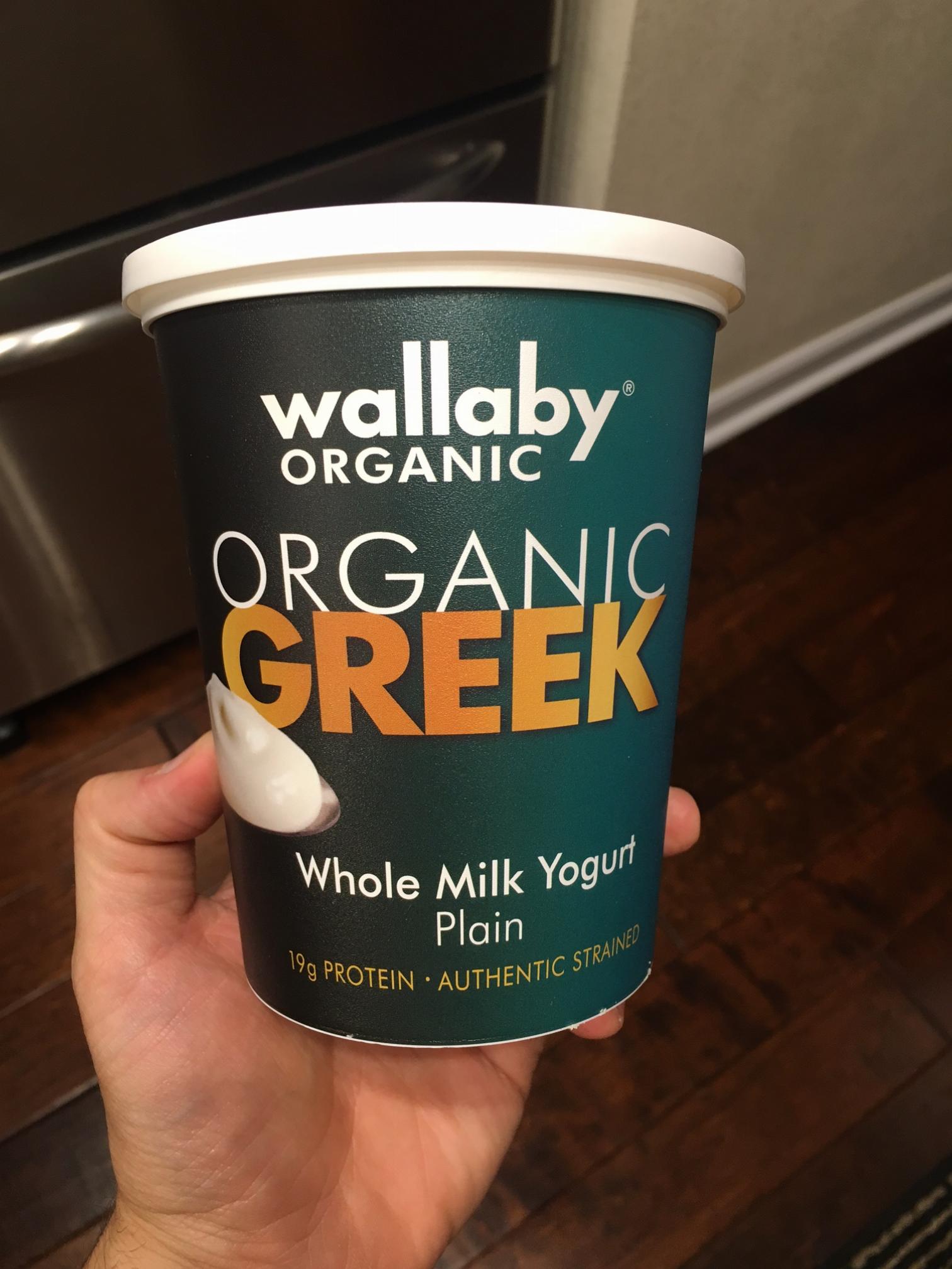
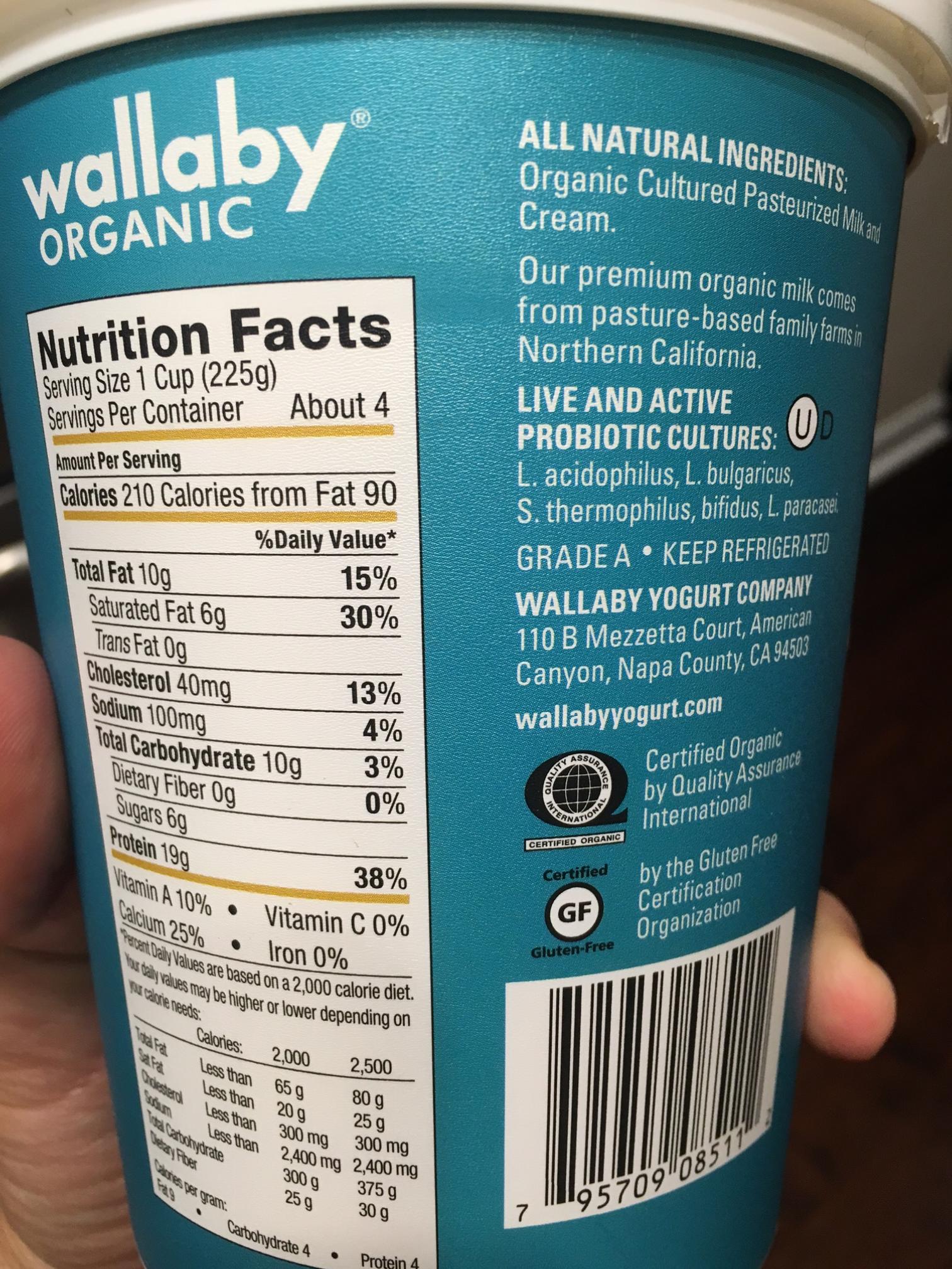
Thought I'd add to the thread an awesome Organic Greek Whole Milk Yogurt.

For 32oz container, The Wallaby Organic Greek Whole Milk Yogurt  was $6 at the local grocery store. 

IMG_2726.JPG

IMG_2727.JPG

Fabio Genesoni
On 6/2/2016 at 4:11 PM, Jonathan Pettit said:

Row after row after row of 0% and 2% yogurt.


Just to let you know, same story here in Italy. I have not yet found the full fat. Only  the "no bueno" ones. <_<
Ian Gibson

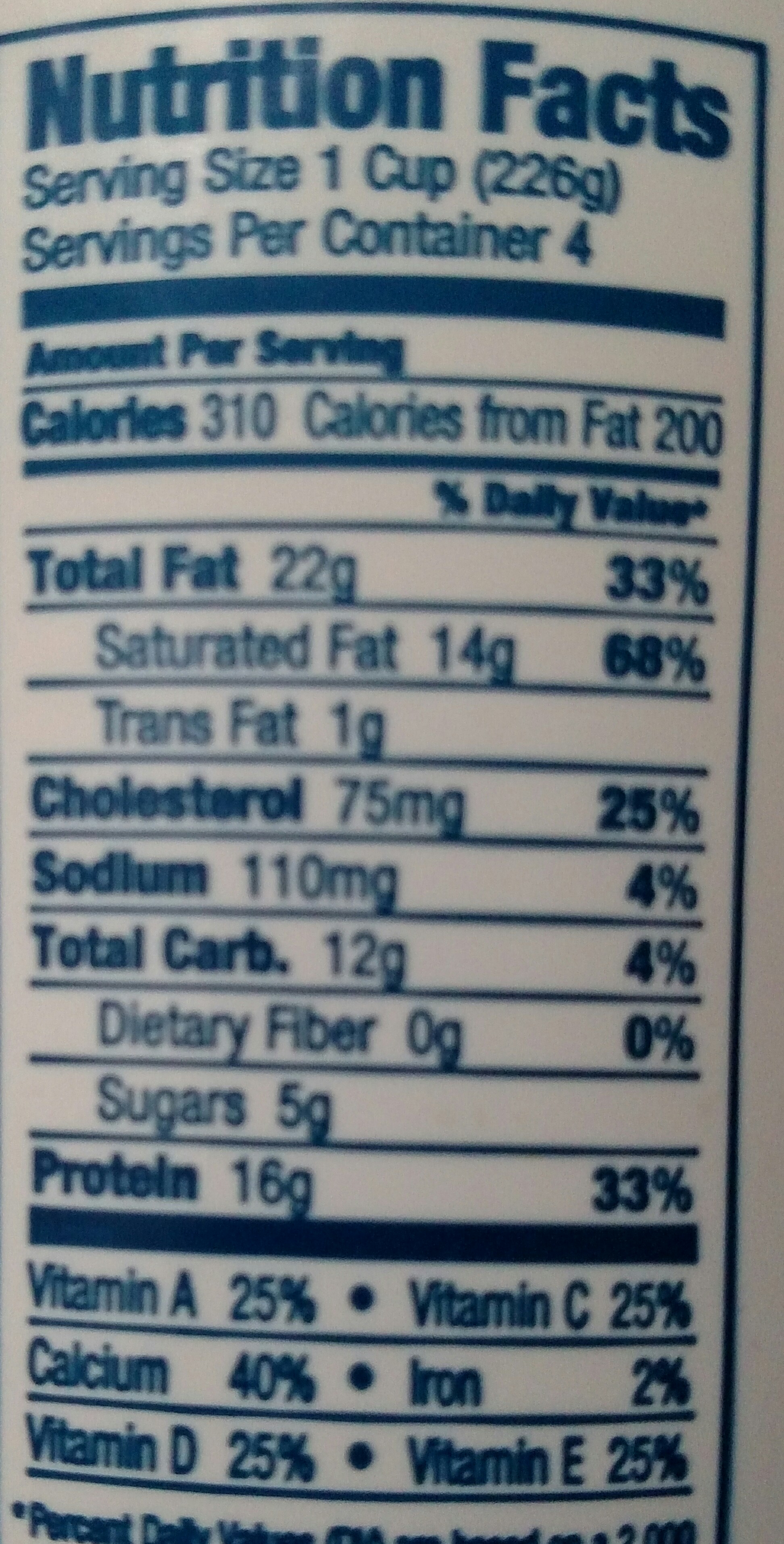
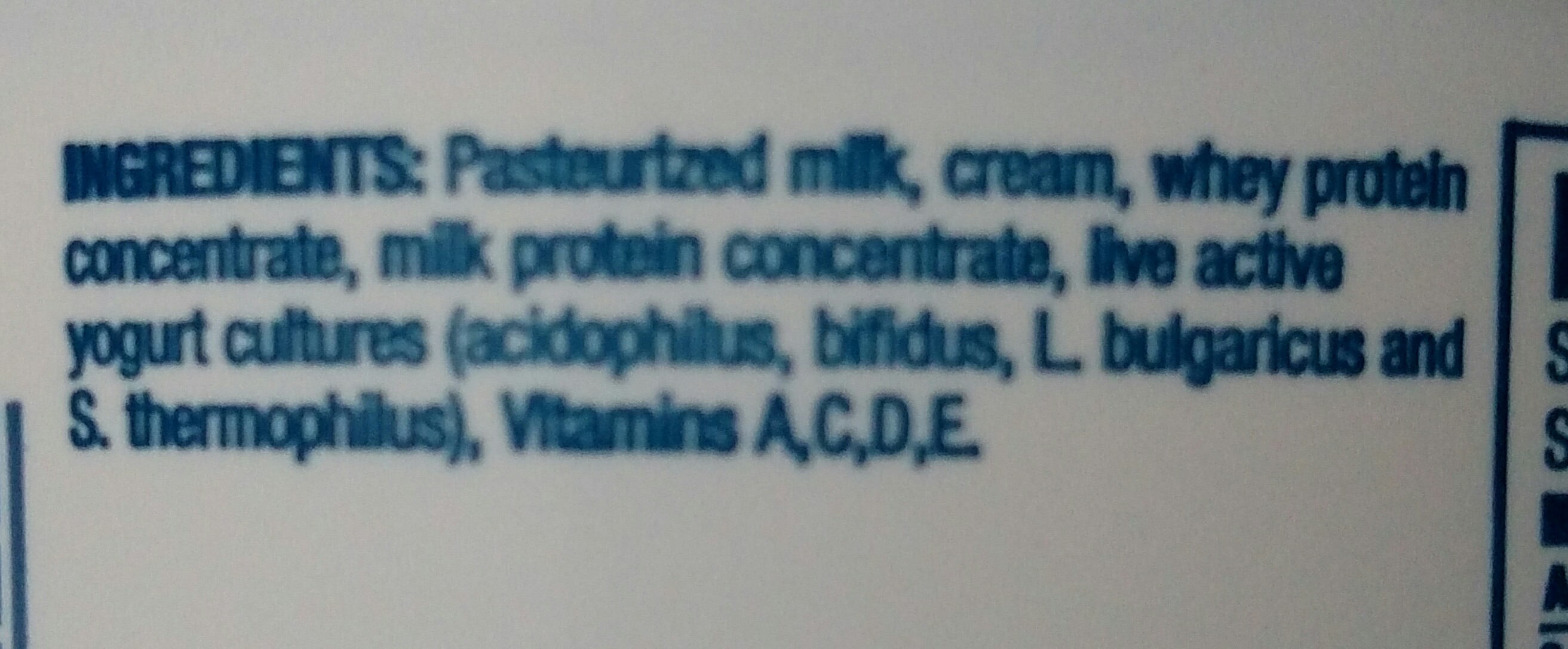
I managed to find a 10% milk fat Greek yogurt. I know full fat is desired, but can you have too much? The protein content is lower than 4%'s I've seen, even though this has added protein concentrates. I eat my yogurt with cottage cheese, so the lower protein isn't a big issue. Should I stick with this or go back to Fage Total? IMG_20160720_192533.jpgIMG_20160720_190357.jpg

Jeff Serven

To be honest Im not sure. The lower content of Whey is alarming however and the fact they add WPC. The content may be lower because they are calculating the live active cultures to have eaten some of it(for lack of a better term) but that would be uncommon. Not sure why they would add WPC. 

Ryan Bailey

Well said by Jeff. I would also go back and read Jeff's first response on this thread for a big time insight into the overall importance here. 

Also, I would look at the source. Is the cow:

1) Grass-fed or pastured,

2) Organic, or

3) Local?

Sometimes the animal and it's natural health (as it also relates to your consumption)  is more important than the % of fat on a processed yogurt container.

Ian Gibson

From what I can find about the cows (pretty much nothing), none of these are true. I'll check out all my options Thursday when I get more groceries. Thanks guys. 

Ryan Bailey

Sorry, hope I didn't sound like a snoody, organoMan, on my last post about pastured dairy. Its just that it is fairly common in the rural, "dairy state" where I live.  It might not always be realistic to find these options in the everyday yogurts. A lot of the options above look pretty yummy to me. It's cool seeing everyone's effort on here looking for all the good foods that can be discovered in Thrive 1. Inspiring!

Jeff Serven
On July 27, 2016 at 7:14 AM, Ian Gibson said:

From what I can find about the cows (pretty much nothing), . 

Funny!

Isabelle De backer

I asked myself the question a lot... why is Greek yoghurt better than other plain yoghurt?

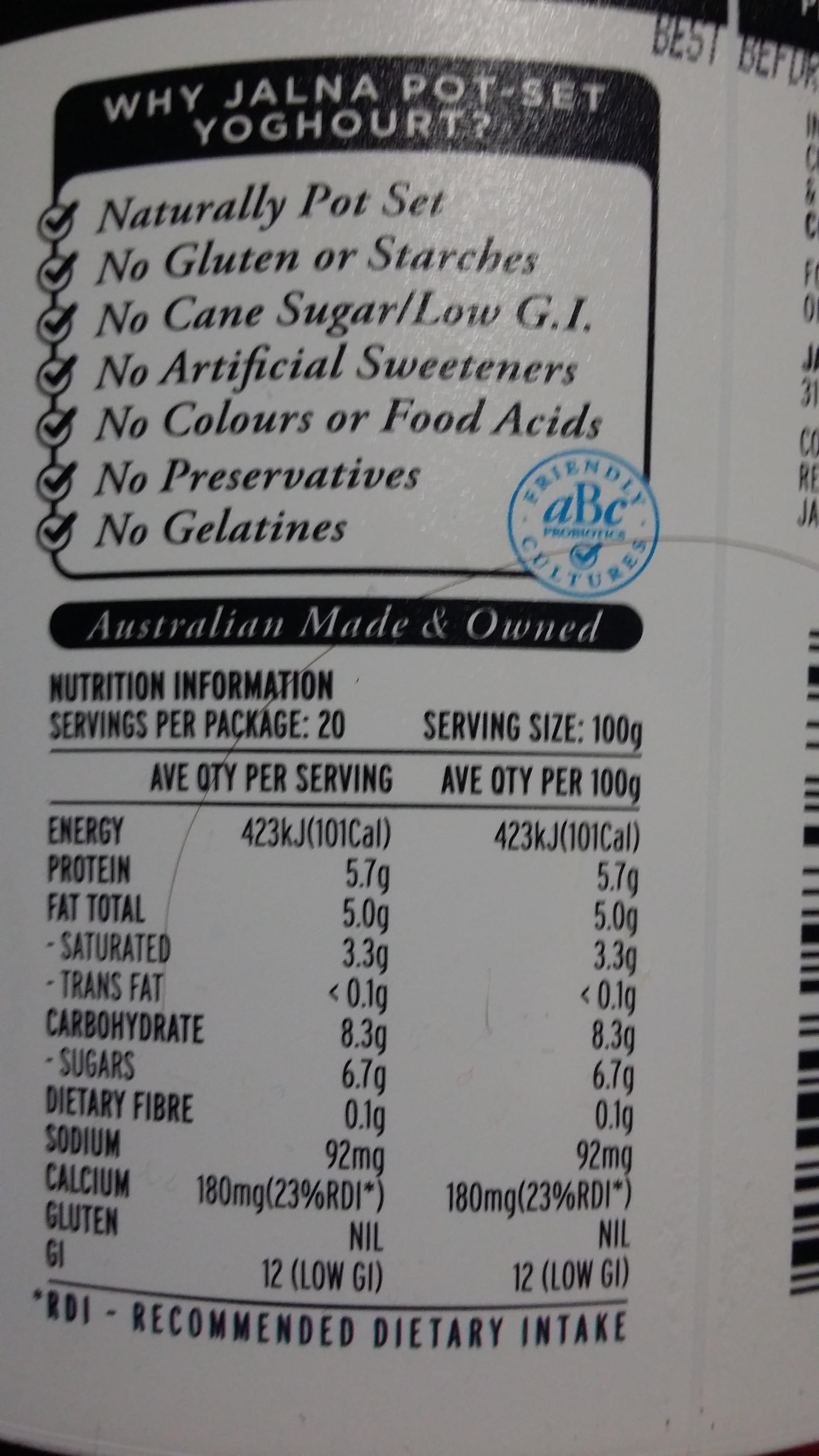
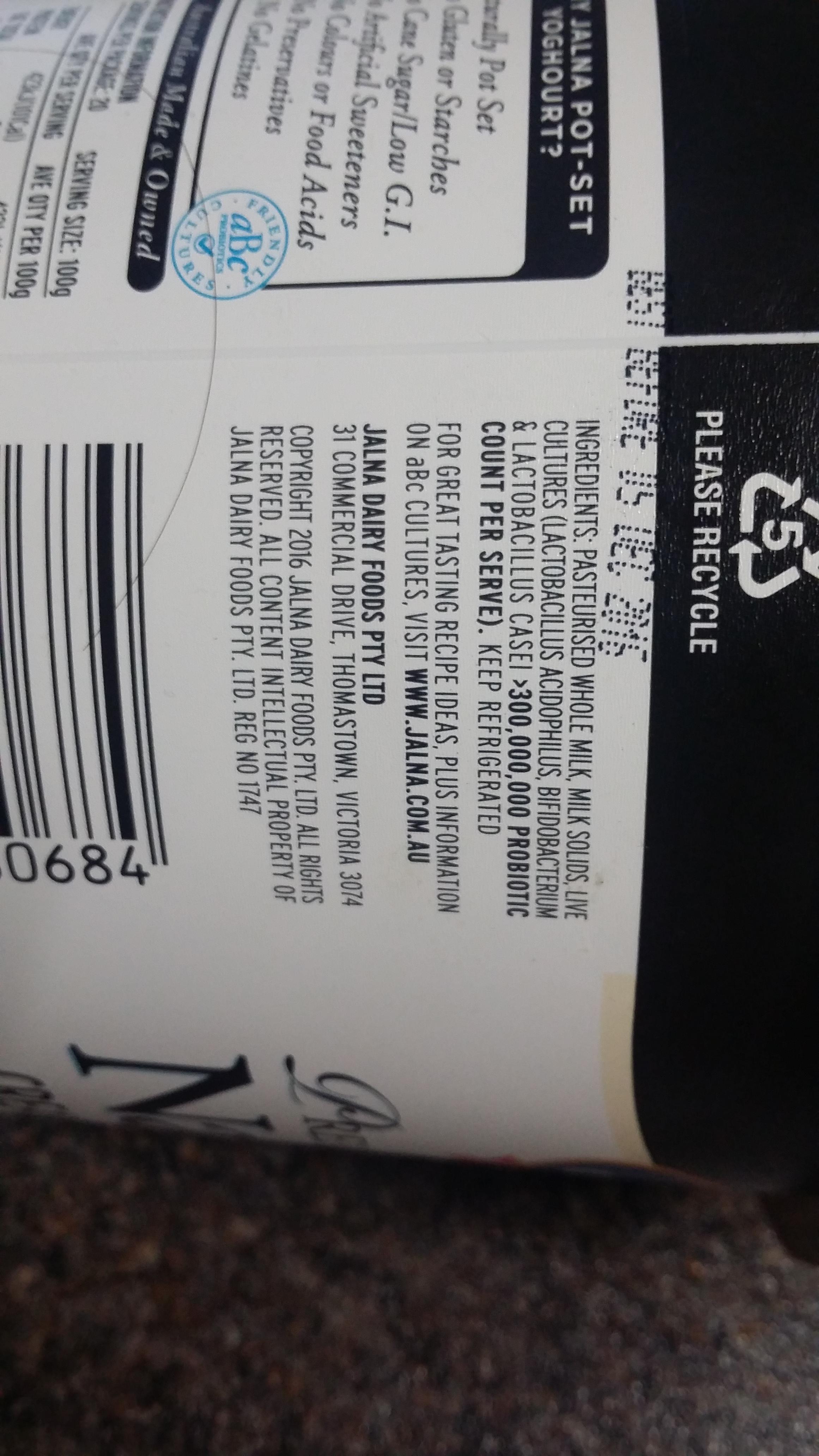
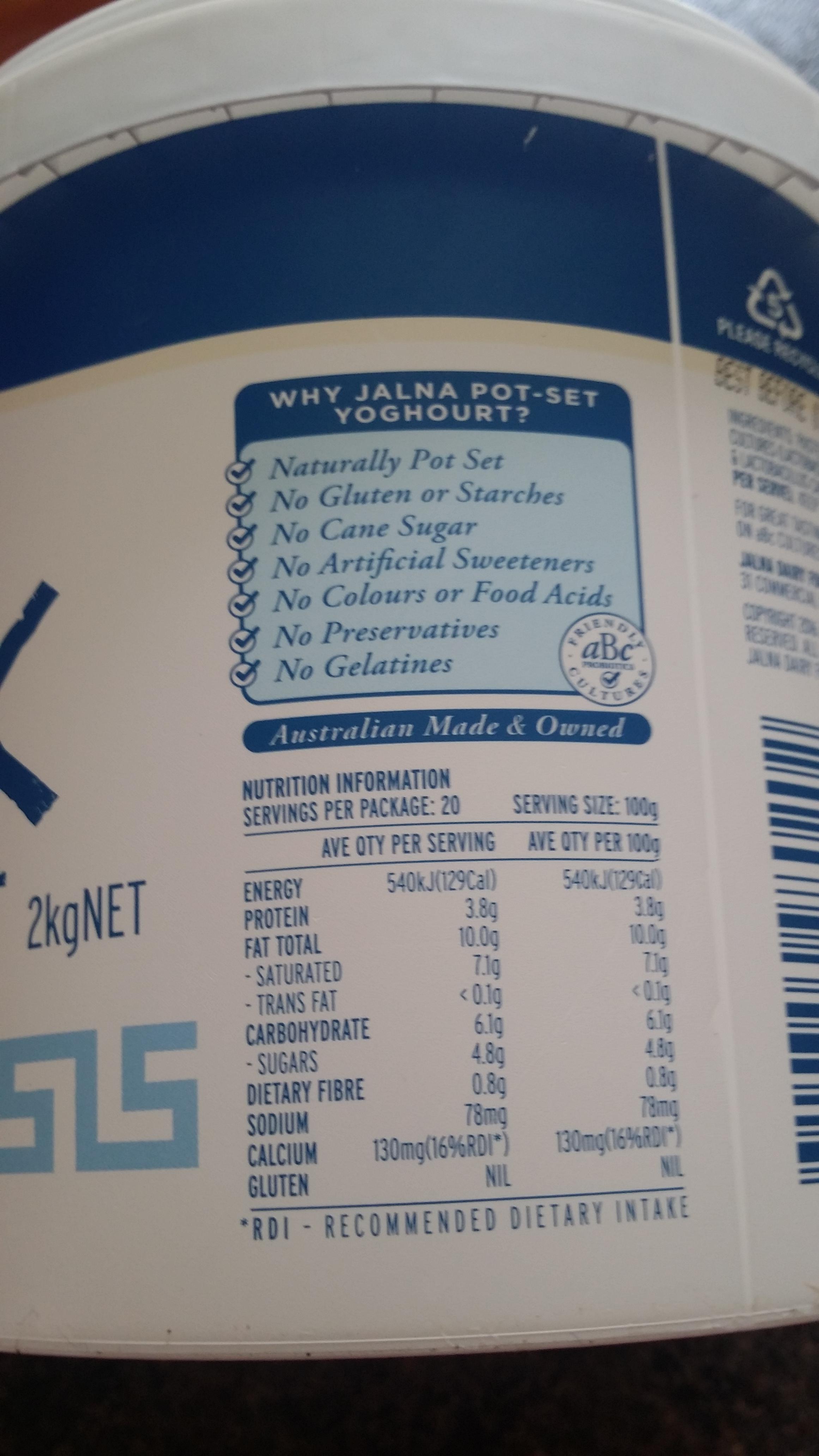
I have compared my favourite mainstream brand here in Australia and the difference is that the plain one has an ingredient called "milk solids" and the Greek one had "cream" instead. The Greek one has more fat, less sugar and less protein per 100 gr as well. 


The first 2 pictures relate to plain yoghurt, the last one is the brand Greek yoghurt. should I switch to Greek and why? more fat and less sugar is better? 


Also I like mixing with rolled  oats and a banana cooked in water - would the addition of the banana compromise the fat because of the amount of fructose per Jeff ' s comment above (I. e. If the blood is already saturated with free fatty acid) ?? 


Thanks

20161112_072401.jpg

20161112_072602.jpg

20161112_083753.jpg

Katherine Zodiaco

Oh my gosh, you guys, I love you. I started Thrive a month or so ago and have actually caught myself marching up & down the yogurt rows of my local markets asking The Gods; WTF does a gal have to do to buy some fat in America?! I'm so glad to know I am not the only person going nuts over this stuff. It's insane - 3 different grocery stores in a block all stocked to the roof with products, and I can't find one darn full fat greek yogurt. Sheeesh.

Ching Yin Leung

I first started with a 10% "mediterranee" yogurt (whole milk, milk protein, bacteria culture). The protein was presumably added back in since whey was strained out in making greek yogurt.

Later, I decided to get the organic regular yogurt with just two ingredients, whole milk and bacteria. I can always strain it myself or eat a bigger portion. Locally, there are literally no other whole milk yogurt options without additives. Definitely frustrating.

Ferdinand Berr

Seems like it's at least a little bit easier to get the stuff in Germany, I was successful on my first try;p


APOSTELS jogurti:

ingredients: cream yogurt, milk protein

nutrition information per 100 g is:

energy 558 kJ / 134 kcal

fat total 10 g
(saturated 6,5 g)

carbohydrates 5,2 g
(sugar 3 g)

protein 6,5 g

salt 0,1 g


I ate the whole 500g cup today for breakfast (try to gain some weight:p), mixed with some blueberries and cocoa. That stuff was nice! Would this already be too much fat for breakfast (50g), though?

Ferdinand Berr

Yesterday I bought turkish yogurt (10% fat) as I couldn't find greek - are there any important differences? In fact, ist any yogurt with a high amount of fat percentage fair game? What should I/we be looking for?

On a similar note, what about quark with a high amount of fat - as an example:

"Berchtesgadener Land Topfen Rahmstufe"

ingredients: quark (fat content: 50% of dry weight) from skimmed milk, curdled with high quality lactic acid cultures and microbial rennet, also use of cream

nutritional value per 100 g

- 179 kcal

- 8,4 g protein

- 3,6 g carbohydrates (all sugar)

- 14,4 g fat (9,5 g saturated)

- 70% water content


I'm not sure if quark is even a thing in the US, so perhaps that is why it's not mentioned in Thrive? I didn't even find a real translation for "quark", do you guys even know what I mean?=D Looking at the nutritional value, it should actually be even better than greek yogurt, right?