This forum is archived information and is no longer active.

Psoas (hip flexor) release

Started by Mark Collins, September 3, 2015 · 73 Replies · 4,895 Views

Mark Collins

A couple of months ago I discovered this psoas release that has helped me tremendously. You can use this release also as a test to determine how much resting tension you have in the psoas muscle. The psoas attaches from the lower thoracic spine, lumbar spine and into the femur. It has around 35 attachment points, so itbis quite a complex muscle. When it is overactive it will lift the rib cage, extend the upper lumbar spine, flex the lower lumbar spine and place alot of compressive shear loading on the low back. When the psoas is tight it stops us from getting a good hollow body position.

How to test if your psoas is overactive:

1. Lay on a foam roller or something of similar height so the roller is length ways and the edge it is between the shoulder blades.

2. Relax the abs and quads

3. The back of your rib cage should touch the floor without any effort

4. The hamstrings should touch the floor.
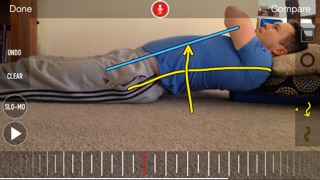
post-4880-0-61627000-1441255254_thumb.jp

When I first tested this I was worse than this picture, but could get flat with alot of abdominal and quads tension.
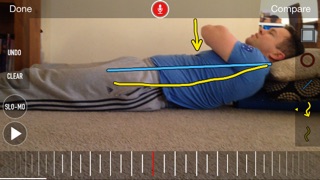
post-4880-0-68085000-1441255267_thumb.jp

This is nearly ideal. From side on the ribs should line up with top of the pelvis. The body should look like it is resting in a hollow body. So now I do not need to use as much tension in the abs and quads to get into a good starting position. This has made a huge difference to all of my Foundation and Handstand exercises. In particular my hollow body rocks feel great.

MattiasF

Wow this was very exciting, I love tests :-)

I tried it today and I need to arch my back very much to get the hamstrings to touch the floor, worse than your first picture. What is a good way to release the psoas? It is not surprising considering that my vertical shin flexibility from FS is terrible.

Mark Collins

The test is the same as the release. Just lay there for as long as it takes to flatten. Could be 1 minute-10 years depending on how tight you are.

Seminole 4

This is probably a stupid question, but we want our feet pointing with toes straight up, right?

Mark Collins
Seminole 4 said:

This is probably a stupid question, but we want our feet pointing with toes straight up, right?

Let the legs relax as this is a passive release. So if the toes turn out don't correct them with contracting any muscles,

Fredrik
Mark Collins said:

Let the legs relax as this is a passive release. So if the toes turn out don't correct them with contracting any muscles,

I tried this with both letting the feet fall outwards, holding them upright, and supported upright. 10min each and supported upright gives me the best release by far.

I used a chair by each ankle, but I guess a rubber band or belt would do just fine.

Side tip from me, first focus on trying to release, then make an active decision to no longer try actively try to release. Make note of the change in sensation.

Mark Collins
Fredrik said:

I tried this with both letting the feet fall outwards, holding them upright, and supported upright. 10min each and supported upright gives me the best release by far.

I used a chair by each ankle, but I guess a rubber band or belt would do just fine.

Side tip from me, first focus on trying to release, then make an active decision to no longer try actively try to release. Make note of the change in sensation.

You will most likely benefit from doing a iliacus release, which is more directed at the hip joint. Thats another post that I will put up later.

MattiasF

I did this for 5 min before my workout today. I'm so very grateful for this Mark, for the first time my BhBR felt easy, I was also able to do my first ever smooth FL/PE4 rep.

Couple of questions. Should my legs be actively straightened or just relaxed (in my case slightly bent)? In the beginning I had to actively arch my back to get my hamstrings to touch the floor, is this the way to do it, or is it a symptom of some other tightness?

Sean Hunter

Whenever i do passive hanging, i feel a holding in my lower back and hips. Like i can completely "let go" but something won't release in that area...i think it's the psoas. 


Any ideas?


Giving this exercise a try today. So we position the foam roller parallel to our spine? as opposed to a T shape?

richardstone

Hi Mark,

Thanks for this, will try later. I have been having great trouble with FL F1 progressions, when doing PE2 I would walk towards my feet as I rocked. I am sure this will help. Thanks for these tips they are great and much appreciated, keep them coming.

Richard

Keegan

Thanks for posting this Mark, definitely going to give it a try. How often would you advise doing this release?

Also interested to the the Iliacus release if you get a chance to post it. Also, if you have any good pec minor releases I'm all ears. :-)

Mark Collins

I check this release daily. I also make sure I do it before the FL exercises as then i know i dont have to waste my abs on overcoming an overacive psoas.

I also make sure that in standing/sitting/walking my ribs are in line with the front of the pelvis. When i do this the release does not need to be done. If i walk around with my ribs forward and up I need to spend time releasing what I have overactivated.

Keegan

Awesome. Thanks for the replies. Tried out the test and release last night and as I expected I was like the first pic you posted. I actually didn't feel like I was getting much release with my legs straight though and the foam roller was starting to bother my back, so I switched to a bent knee version and that seemed to allow me to get some release.

I will continue with this and progress to the straight leg version when possible.

Thanks again.

Mark Collins

Keep the legs straight. The upper body needs to be elevated, so try putting the roller on a cushion. The idea is to get the ribs down and back. If you keep bending at the hips you are just reinforcing the shortening of the hip.

Mark Collins
Sean Hunter said:

Whenever i do passive hanging, i feel a holding in my lower back and hips. Like i can completely "let go" but something won't release in that area...i think it's the psoas. 


Any ideas?


Giving this exercise a try today. So we position the foam roller parallel to our spine? as opposed to a T shape?

Along the spine.

Passive hanging....so much going on with the body. When you fully release the psoas then retest passive hanging. If its bettervthen it was the psoas.

Freeflyer

Apparently my psoas isn't tight, but I cannot stop my feet from rolling outward.  Really looking forward to that iliacus release.

Keegan

Right, I understand the theory of lengthening the Psoas by straightening the legs, and that flexing the hips keeps them in a shortened position.

But just like I might like to be able to start working on pancakes with my legs out as wide as my arms can reach them, hips on the floor, chest on the floor and APT, many people have to start with a regressed modified approach.

Attempting the original stretch with my legs straight felt equally futile to working pancakes with my butt on the floor, so I regressed the position by allowing my hips to flex. Even then it took me a little while to get my back down, but I did feel a release in my Psoas, which I had not felt any of with the straight leg version (despite laying there for over 10 minutes) and no discomfort on my upper spine.

I plan on gradually extending my hips as my Psoas release until I get to the legs straight version, just like I would progress any stretch.

Do you think placing a weight on the rib cage and keeping the legs straight (to provide more stretching potential) would be a better option?

PhilipP

Hi Mark

What was the height of the foam roller you used? I tried this on a 4x4 piece of would I had laying around and wasn't sure if that would suffice, also depending on how far up or down between the shoulder blades I put the edge of would the more successful I was on getting my back down to floor. The wood higher up closer to my neck the easier. Any specifics on this? Thanks

Phil

Mark Collins
PhilipP said:

Hi Mark

What was the height of the foam roller you used? I tried this on a 4x4 piece of would I had laying around and wasn't sure if that would suffice, also depending on how far up or down between the shoulder blades I put the edge of would the more successful I was on getting my back down to floor. The wood higher up closer to my neck the easier. Any specifics on this? Thanks

Phil

The height I use is 10-15cm. If you use wood place a pillow on it for comfort. If it is at the level closer to the neck make sure you feel the whole spine and hamstrings touching the floor.

Mark Collins
Keegan said:

Right, I understand the theory of lengthening the Psoas by straightening the legs, and that flexing the hips keeps them in a shortened position.

But just like I might like to be able to start working on pancakes with my legs out as wide as my arms can reach them, hips on the floor, chest on the floor and APT, many people have to start with a regressed modified approach.

Attempting the original stretch with my legs straight felt equally futile to working pancakes with my butt on the floor, so I regressed the position by allowing my hips to flex. Even then it took me a little while to get my back down, but I did feel a release in my Psoas, which I had not felt any of with the straight leg version (despite laying there for over 10 minutes) and no discomfort on my upper spine.

I plan on gradually extending my hips as my Psoas release until I get to the legs straight version, just like I would progress any stretch.

Do you think placing a weight on the rib cage and keeping the legs straight (to provide more stretching potential) would be a better option?

The release is different to a stretch. You are placing your body in a position that allows the psoas to relax so there is no shear load on the spine. The psoas has many short fibres that are impossible to stretch. This is different to a stretch that you feel in the adductors with the pancake.

10 minutes is not along time for a release. I have spent up to 30 minutes for some releases. These are low load exercises and not to be forced. We already do alot of high load mobility with our iM's and stretch series.

Placing a weight on the chest will most likely increase the psoas activity as a protective mechanism.

You also need to look at what you are doing in the day that could be overactivating the psoas. Lots of sitting and keeping the ribs up and forwards will fire the psoas up. You could have been doing this for years so it will take a while to correct.

Keegan

Thanks for the reply and clarification Mark. I had not realized there was a difference between a release and a passive stretch. Last night I tried it again with my legs straight and a pillow on the roller and stayed there a lot longer. Didn't get to the point where I was effortlessly down, but did get to the point where I could get my back down without too much effort. Thanks will keep at this.

Also, I have been obsessively paying attention to keeping my ribs pulled down since your initial reply. Flaring my ribs is indeed something I have been doing for decades and was never corrected. Years of heavy deadlifting, benching, and squatting with an arched back have made those muscles very strong, so it'll probably be a while before I can do this effortlessly, but I'm working on it.

Thanks again!

Mark Collins

I was the same as you, which was mostly caused by lots of weightlifting. I now realise that the big emphasis on ribs down in GST keeps the psoas from dominating. Having the ribs over the pelvis is also a powerful and mobile position.

JN12
Mark Collins said:

You will most likely benefit from doing a iliacus release, which is more directed at the hip joint. Thats another post that I will put up later.

Mark, could you please post this realease? I think I would benefit from this as well.

Mark Collins
JN12 said:

Mark, could you please post this realease? I think I would benefit from this as well.

Thanks for the reminder. I will get it done this weekend.

Nick Roy

This looks interesting. I'll give this a try when I get back to the house. I usually use 2 moves from Pete egoscues pain free to release my psoas. Curious of this one's effectiveness over what I currently do.