The instructors in the videos demonstrating the bridge claim to be extending the thoracic spine, but all I see is (1) extreme extension (kinking) over very few vertebrae at the thoracolumbar junction (2) a completely flat thoracic spine (3) extreme flexion at the cervicothoracic junction. Is this the kind of T-spine mobility I should be aiming for? Moreover, because I tend to do a lot of chair sitting, I have an overly kyphotic cervicothoracic junction and an overly lordotic thoracolumbar junction with head forward - won't this just further mobilize me into these postural deformities?
This forum is archived information and is no longer active.
Thoracic Mobility - is the target really the thoracic spine?
Started by Daniel Korman, July 2, 2016 · 3 Replies · 131 Views
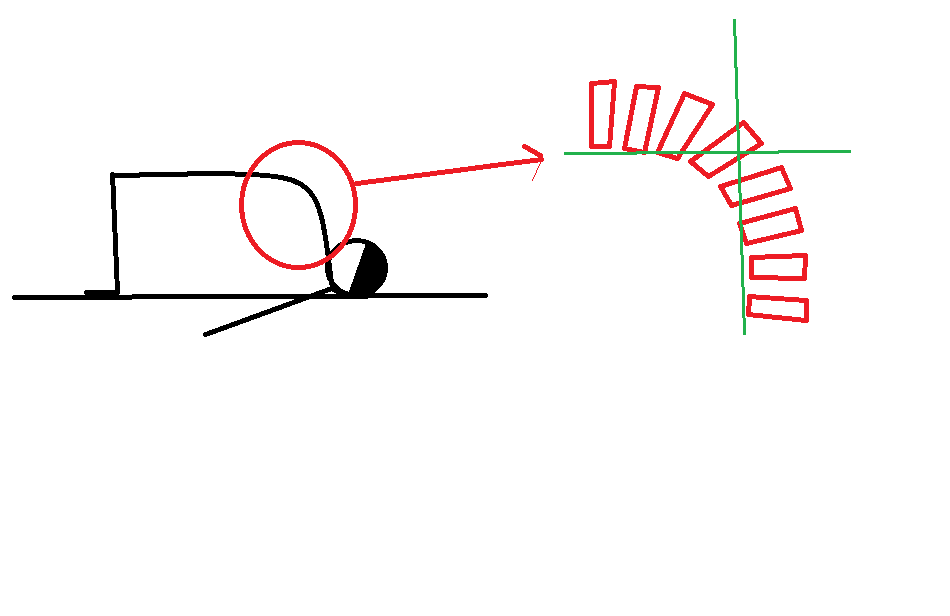
The form you should aim is a total 90° bending of the spine. This mean that if we add the little bend of each spine unit we will reach an amount of bending equals to 90°. You will find that using a strong retraction and a strong depression it is easier to reach the desired posture. if correctly executed there should be no stress over the lumbar spine.
see the photo below.
Thank you for helping to clarify - it makes sense that a global arch would be protective, but still enable mobility. I'm still uncertain whether to expect true extension (versus just flattening) of the mid-thoracic spine. Regardless, I assume the smart thing to do is to continue to protect my lumbar and cervical spine while extending my thoracic spine, and accept whatever results I get.
Yes of course, in order to avoid bad executions due to mobility limitations you need to scale the movement. in this case elevate the feet on 20-30 block should be fine.