This forum is archived information and is no longer active.

Feet position and depth in Isometric Middle Split

Started by Young Chan Park, April 17, 2016 · 6 Replies · 198 Views

Young Chan Park

I find that there are two possible feet positions in this stretch.

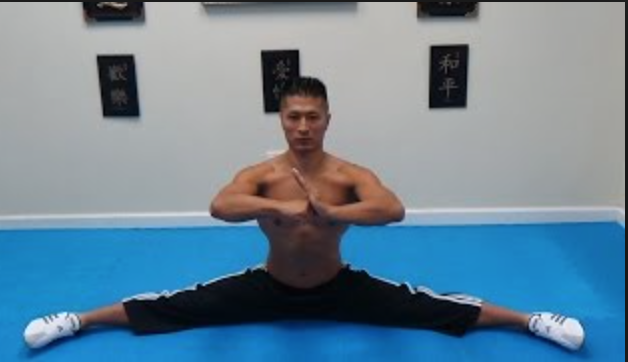
I just filmed a really short isometric middle split to show you the question. On the video above, from the start till 9 seconds I split my legs while keeping the soles of the feet on the floor. I can go slightly lower if I twist my ankles so the soles are facing side ways, which I demonstrate 10 seconds and onwards. 

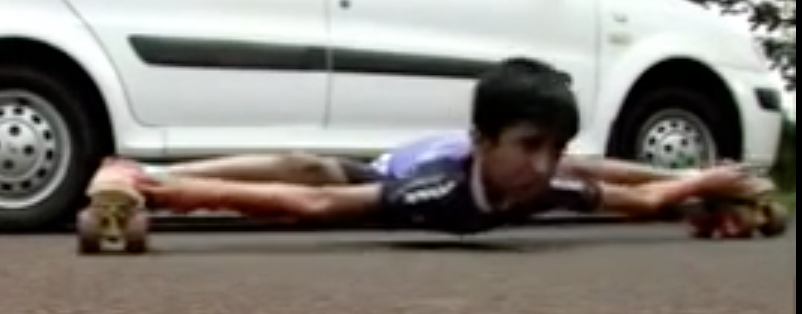
Should I always strive to only go low as possible while keeping the soles of my feet on the floor (Like the roller blading kid)? Or should I try to go low as possible to get a good stretch with the twisted feet (Like the asian martial artist)?
Screen Shot 2016-04-17 at 19.40.13.png

Screen Shot 2016-04-17 at 19.48.31.png


Alessandro Mainente

You have 2 possible opposite choices:

1-leg externally rotated with support on the heels and thumbs pointed to the ceiling that promotes a split that involves more the hamstring and calves

2- feet pointed forward , this variation involves only adductors

depending upon your actually tight points you can evaluate where to focus. since the variation of the course is a standing variation I suggest the second version.

Young Chan Park
12 hours ago, Alessandro Mainente said:

You have 2 possible opposite choices:

1-leg externally rotated with support on the heels and thumbs pointed to the ceiling that promotes a split that involves more the hamstring and calves

2- feet pointed forward , this variation involves only adductors

depending upon your actually tight points you can evaluate where to focus. since the variation of the course is a standing variation I suggest the second version.

Well this is a middle split series and coach says in the follow along video that we want to target the adductors so im doing variation two. But i mean which feet position should I use for this stretch? 


I was assuming this would be an obvious answer, that I should go with soles on the floor so my ankle mobility gets better as well. But I don't really feel much stretch if I do that because I can't go that low. Should I just be patient and let the ankle mobility to get better or is that not a necessity?

Cole Dano

It's not so obvious of an answer, due to the anatomy of the hip. 

What's actually the important factor here is where the knee is facing.

fUYaDz7.jpg

In the diagram above the knee is facing forward, this would correspond to your flat foot position. You can see if you were to just raise the femur to the side, it would literally run into the hip bone and not be able to move further due to that bit of bone sticking up at the side.

This is why you feel you can't get down as far with totally flat feet, knees facing forward. At some point something needs to give. The knees will need rotate to face outward to get the bone out of the way, and depending on the amount of rotation the angle between the legs may also need to close. What the feet do to accommodate this isn't that important, and to some extent depends on the exact stretch you are performing.

Young Chan Park
1 hour ago, Cole Dano said:

It's not so obvious of an answer, due to the anatomy of the hip. 

What's actually the important factor here is where the knee is facing.

fUYaDz7.jpg

In the diagram above the knee is facing forward, this would correspond to your flat foot position. You can see if you were to just raise the femur to the side, it would literally run into the hip bone and not be able to move further due to that bit of bone sticking up at the side.

This is why you feel you can't get down as far with totally flat feet, knees facing forward. At some point something needs to give. The knees will need rotate to face outward to get the bone out of the way, and depending on the amount of rotation the angle between the legs may also need to close. What the feet do to accommodate this isn't that important, and to some extent depends on the exact stretch you are performing.

Ahh ok so the roller blading kid is only able to do the full split while keeping the knees facing forward because his entire torso is near the ground, and the martial artist's knee is probably facing slightly upwards as well?


So when I do the isomiddle stretch, I shouldn't force myself to go down too much while keeping knees faced forward because that might damage my hips and/or femur then.

Cole Dano

Yes exactly.

If you look at ballet artists, you'll see that they have a mastery of this, so when you see them doing the very high leg lifts to the side, they actually are continuously rotating the knee back and creating PPT so the butt doesn't stick out. 

Give that a try sometime and you'll find how much active flexibility it takes!

Young Chan Park
4 minutes ago, Cole Dano said:

Yes exactly.

If you look at ballet artists, you'll see that they have a mastery of this, so when you see them doing the very high leg lifts to the side, they actually are continuously rotating the knee back and creating PPT so the butt doesn't stick out. 

Give that a try sometime and you'll find how much active flexibility it takes!

http://c.ymcdn.com/sites/www.iadms.org/resource/resmgr/imported/info/IADMS_Bulletin_for_Teachers_1-1.pdf

I've actually saved this article a while back for once I get my full middle split to work on active flexibility :)

Thanks for the technical details :P I study Biology so anatomically detailed answers are my favourite on the forum :)