This forum is archived information and is no longer active.

Iliacus release

Started by Mark Collins, February 25, 2016 · 23 Replies · 1,184 Views

Mark Collins

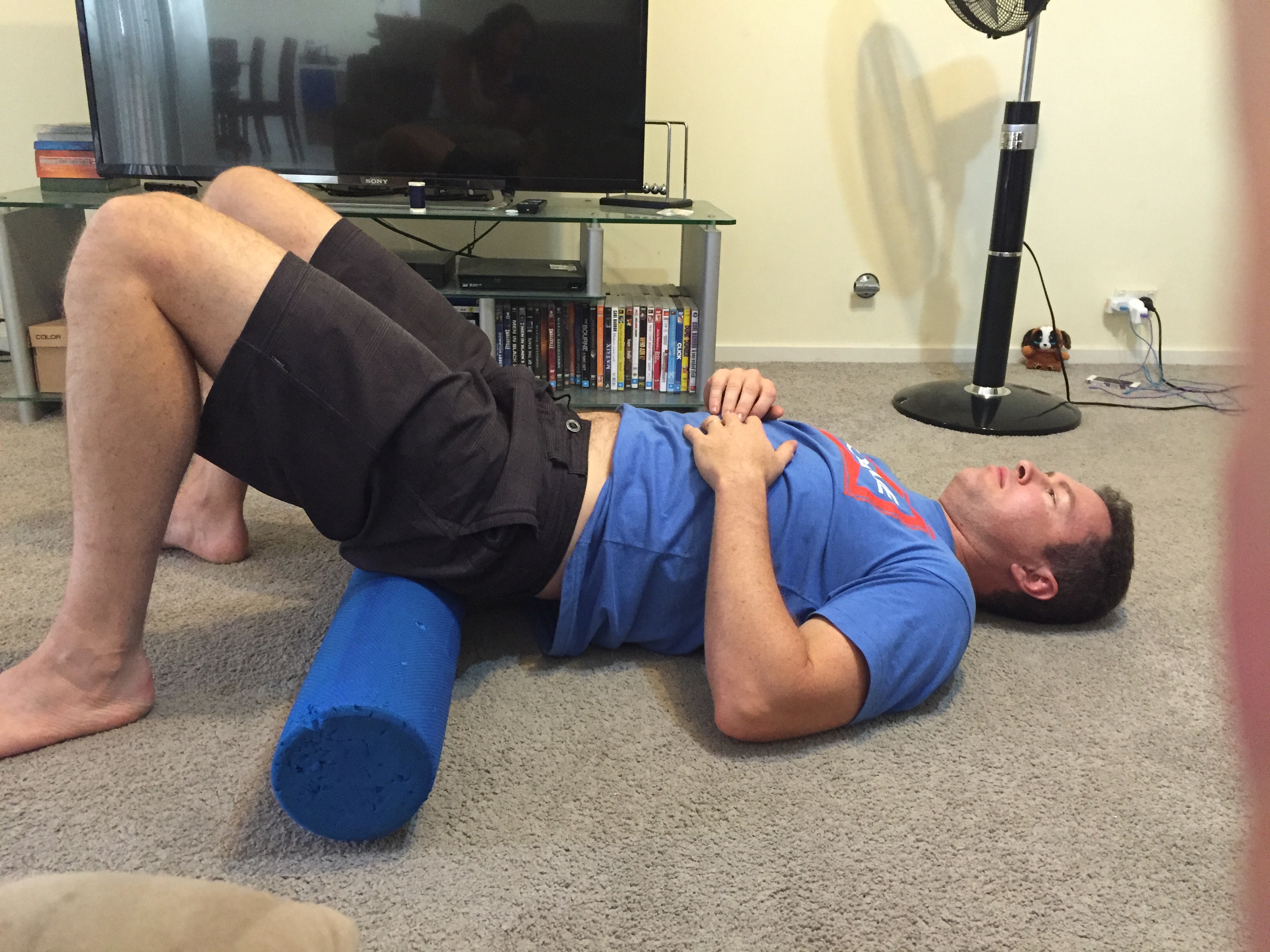
I have finally got around to posting the iliacus release that will help to open the hips. The psoas and iliacus are different muscles and need to be mobilised differently. A tight iliacus will cause the hip to flex which makes hip extension past 0 degrees almost impossible. As it flexes the hip it will anteriorly rotate the pelvis. Alot of of GST needs a good PPT so a tight iliacus is our nemesis.

These are a release so you need to spend a long time in these positions to get the benefit. I will at times watch TV in these positions for 30 minutes. They should be used to compliment the more aggresive stretches done in the Front Split series and the active mobility that is done in Foundation and Handstand. 

I rotate through each position every couple of minutes. The idea is to get the pelvis to PPT effortlessly and let the front of the hip open. Do not force these positions as you are trying to relax so the brain thinks their is no threat and will ot spasm the muscle to fight you.

The iliacus release works well in conjuction with the psoas release. So if you have one hour of TV watching get off the couch and stop shortening the anterior hip.
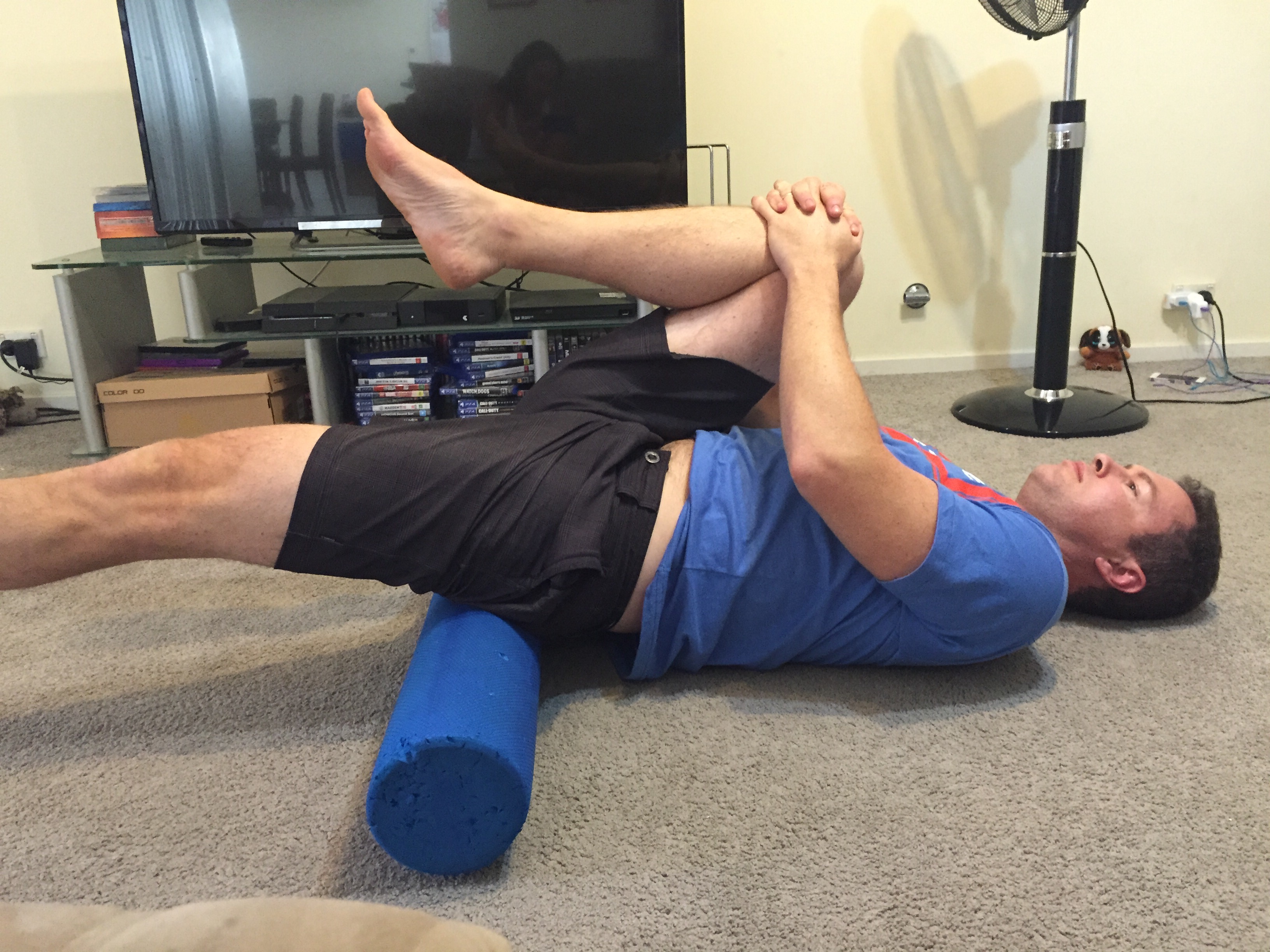
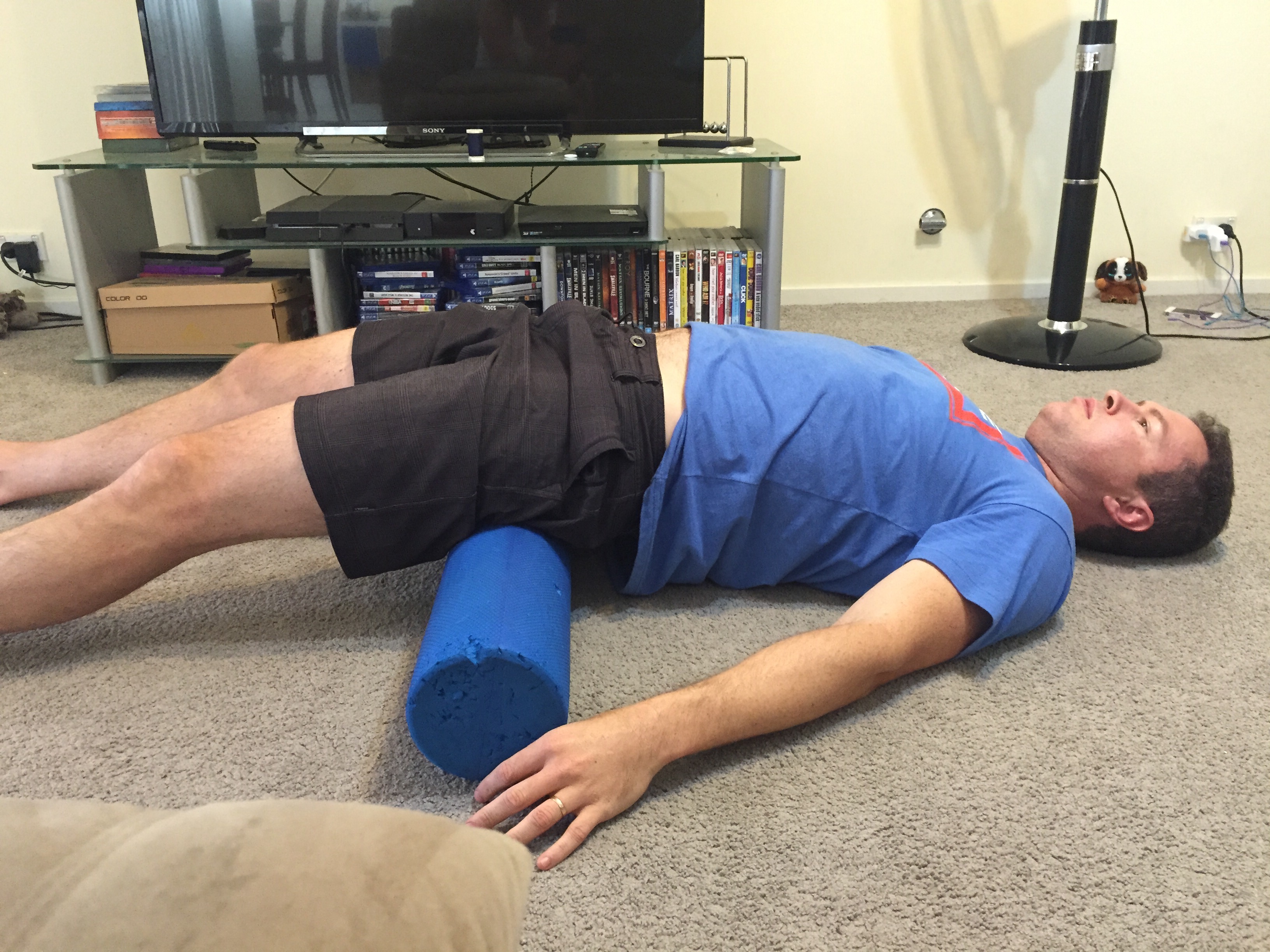
image.jpeg

image.jpeg

image.jpeg

Mikel Perez

This is a gold mine. Thank you soooo much!

Keilani Gutierrez

you put the foam roller on the inferior portion of the glute, Mark?

Eva Pelegrin

Keilani, I place it resting on sacrum (where it feels good). If you go too low it tends to slide out. Too hight doesn't work either. 

Mark Collins
17 hours ago, Keilani Gutierrez said:

you put the foam roller on the inferior portion of the glute, Mark?

I knew you would like this one Keilani. As Eva said on the lower sacrum. The roller has to be at a point that tips the pelvis back into PPT. So inferior to the anterior iliac spines (bones at the front of the pelvis)

Keegan Yentsch

Awesome! Thanks for posting! After doing the Psoas release for a few weeks (every day) and continuing to build flexibility with the Stretch Courses and iM's I can now pretty much easily get my back onto the ground in that stretch right away (with toes pointed straight at the ceiling).

Definitely going to give these a go as well! Anything to make PPT easier! 

Question on the first position though, is your extended leg's good on the floor/a pillow? I would imagine that having it unsupported would not allow you to really relax like you should.

Mark Collins

Great to hear. The extended leg is off the ground so the weight of the leg opens the hip. You ncan also move the leg side to side to find your mist tight areas.

Kevin Easton

I feel a big arch in my lower back.   What am I doing wrong?  Bad position of the roller?

Mark Collins

Place the roller lower. If you still have a an arch it is because the iliacus is tight.

Stephen Yeh

Thanks for this post Mark! I did the psoas release and it worked wonders..  For this particular release, what does PPT mean?  Also, would I be able to position myself at the edge of a bed and do these or does my hip need to be elevated?  Thank you

Alessandro Mainente

PPT means posterior pelvic tilt.

Eva Pelegrin

Yes, elevated hips on a firm surface. A roller is preferable, but if you don't have one, you could try using a yoga block under your sacrum. A bed is probably too soft  of a surface.

I would just but a roller because  you can use it for so many areas...

Mark Collins
On 28 August 2016 at 6:11 PM, Stephen Yeh said:

Thanks for this post Mark! I did the psoas release and it worked wonders..  For this particular release, what does PPT mean?  Also, would I be able to position myself at the edge of a bed and do these or does my hip need to be elevated?  Thank you

The bed will cause too much lumbar extension so it could potentially make it worse by getting a protective tightening of the muscle.

Patrick Rentz
4 hours ago, Mark Collins said:

The bed will cause too much lumbar extension so it could potentially make it worse by getting a protective tightening of the muscle.

Hey Mark, 2 questions for you:

1. Where can I find your psoas release?

2. I used to be able to do this at will, but not so much anymore. If I'm lying down flat on my back, I cross my legs/feet, and put pressure with my legs on the outside of my feet like they're trying to go through each other. I feel a clunky pop right above the sacrum. Not painful at all, but almost as if something is releasing/popping into place. Do you know what this is?

Thanks in advance - love reading your posts.

Mark Collins


Max Wallach

Hey @Mark Collins,

Initially how often and for how long would you recommend doing the Iliacus and Psoas Releases?  and how would you implement them together?  Would you rotate through them for an hour total time in the evening or for 30 min each everyday?

Thanks,
Max

Patrick Rentz
7 hours ago, Mark Collins said:


Thanks, Mark. I'm tight everywhere, LOL.

Reading your psoas thread, I'm definitely guilty of anterior pelvic tilt, i.e. my ribs are up. I changed to a standing desk about a year ago, so I swapped the rounded back/shoulders for the arched back problem. It's difficult to find a cue that keeps my ribs in line but doesn't result in me hunching my upper torso/shoulders. Squeezing the glutes is a good cue, but it's easy to fall out of the position when not flexed. The best thing I've found is half-sitting on a high chair - basically leaning against it. Anyway, I look forward to using both these releases - thanks again for the input!

Mark Collins
4 hours ago, Max Wallach said:

Hey @Mark Collins,

Initially how often and for how long would you recommend doing the Iliacus and Psoas Releases?  and how would you implement them together?  Would you rotate through them for an hour total time in the evening or for 30 min each everyday?

Thanks,
Max

I would do them as often as possible, so daily is best. Anywhere from 10-60 minutes will work depending on how tight you are. Once they are released and you integrate the new range into your normal daily movement you will rarely have to do it. I spent months doing these and now only perform them occassionally. I walk alot more than I use to, which has done wonders in maintaining the iliacus and psoas range of motion.

Lucy Wilkins

Hi Mark

 I have just tried this. The first one- with the knee raised, the roller just slips out. the second one, with the legs extended really hurts my lower back. Do you have any suggestions?

 thanks, Lucy

Mark Collins

Place the roller slightly higher towards the head. If this still hurts then don't do this exercise as it generally indicates a pelvis problem. Most people with pelvic injuries won't like this exercise as it aggravates the long dorsal ligament.

Lucy Wilkins

Thank you Mark, that is very helpful and does make sense as I had a hairline pelvic fracture some years ago ( horses !). i dont generally experience any back aches or pains although I have noticed with a small number of the exercises in F1 and the SS I do feel pain in the lower back.

Would you be able to recommend anything to help the long dorsal ligament?


 thanks for your time


Lucy

Mark Collins

you will need to be careful with exercises when you are laying on your back. As long as you have no residual pain after the exercise then I would not be too concerned. If you do have residual pain afterwards then I would seek treatment.

what are the exercises that you find are causing pain?

Lucy Wilkins

Thanks Mark

On reflection I wouldn't describe it as pain,more of an ache but it does go away immediately I stop the exercise. .I think I will just do more of this with care.

John Conkle
On 8/31/2016 at 3:29 PM, Mark Collins said:

I would do them as often as possible, so daily is best. Anywhere from 10-60 minutes will work depending on how tight you are. Once they are released and you integrate the new range into your normal daily movement you will rarely have to do it. I spent months doing these and now only perform them occassionally. I walk alot more than I use to, which has done wonders in maintaining the iliacus and psoas range of motion.

Did you experience that one side was tighter than the other?