This forum is archived information and is no longer active.

Cubans

Started by Mats Trane, December 30, 2013 · 13 Replies · 1,029 Views

Mats Trane

First I must say how much I love the Im's for HBP in F3-F4. I've been having some issues with my right shoulder since May and just after a couple of times trying all the new Im's it feels alot better. Maybe it's just a coincidence but I hope not.

Back to Cubans. I've used these for years and and like them alot.

What are youre thoughts on these?

How heavy should we go on these? End goal 1/3 of our body weight ? More less?

Should one realy focus on retracting shoulder blades or just stay nutural?
Alessandro Mainente

A good goal,is half bodyweight. I think that to really understand the bio mechanism of Cubans you can look for a seminar or think about physical activation. External rotation works to depress the arms not to depress the scspula. So during,the,Cuban you must maintain the depression so that the rotators are elongated then you ned to reverse the movement. Roll the shoulders forward does not increase the rotator activation. I prefer the Cuban lying prone on a bench. Much more effective with less stress of joints.

I have a previous problem to my rotator cuff. i've built up gradually during this year a 40 kg cuban press, i'm coupling it with some other movements where i feel more activation of the the cuff more then the cuban,

Mats Trane

Interesting thoughts Alex. A 1.5 years ago I went heavy on the Cubans. Nowdays I just use it as rehab/prehab. Light and many repetitions.

When lying down on a bench I suppose you use Dumbbells? I´ll have to try it.

Going as much as 40, what advantages do you think this has given you?

Keilani Gutierrez

still finding a good position to put my shoulder to feel a smooth transition. i get a little bit of crunching, should i retract my scapula? in the middle? let the shoulder roll forward?

Coach Sommer

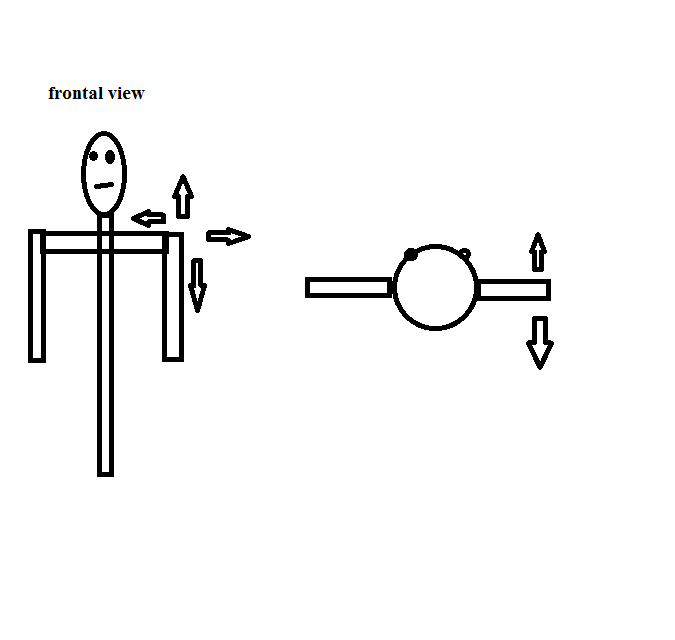
No retraction.

Do not allow the shoulders to roll forward.

Do not bend the wrists.

The back should be remain flat with the chest tall.

Both elbows remain in a single horizontal line thru the shoulder girdle and are also perpendicular to the torso.

Do not allow the elbows to move either forward or backward to facilitate the movement.

The arms do not move, rather they pivot in place. The degree of pivoting which occurs is completely dependent upon your ROM.

Do not elevate the scaps in an attempt to increase ROM.

Yours in Fitness,

Coach Sommer

Alessandro Mainente
Mats Trane said:

Interesting thoughts Alex. A 1.5 years ago I went heavy on the Cubans. Nowdays I just use it as rehab/prehab. Light and many repetitions.

When lying down on a bench I suppose you use Dumbbells? I´ll have to try it.

Going as much as 40, what advantages do you think this has given you?

it's not a real sensation what you can feel, but indirectly your arm will always be pulled down strongly more then before. upper arm will be more safe and you will avoid impingement syndrome or maybe you can heal from it . for months and months i did the cuban with elastic bands. the reality is that when performing BW exercises the necessary strength to pull down the arm is far more bigger compared the resistance of a band. of course the cubans are very good to analyze possible mobility deficit in the shoulders talking about tight rotator (both external and/or internal).

There are no reason to consider the rotator as "high reps-muscles", you need to be stronger here, then use the same approach as other exercise. looking through the numerous exercises for cuff this what works well for the average of the people.

Jon Douglas

Enquiry on these, would greatly appreciate advice;

I have a friend who has experienced a traumatic dislocation (nasty fall) and has since completed several months of diligent rehab-- she has very close to full ROM and rotation and has had no further incident, but she's (understandably) very nervy about anything to do with shoulder mobility. She's been leafing through my Foundation notes and picked up on Cuban presses as being very similar to her (finished) rehab progressions.

I realise 'dislocation' isn't very specific, and I will ask for details if necessary, but is this a movement that can productively and reasonably safely be pursued by a person in that situation? With light weight and (I imagine) limited ROM to begin with. She's at a bit of a loss having completed rehab and unsure where to go from here with it.

Very much appreciated.


Obviously I'm not looking for or giving medical advice, she knows the risks etc, but I want to give her as much information as possible.

Alessandro Mainente

It depends on the type of dislocation that she had. There are two main types of dislocation: subcoracoid (anterior), and subglenoid (anteroinferior).

Unfortunately movement that increases the strength over external rotation it's not so good if the internal rotation is not balanced.

she can approach the cuban but be sure that the subscapular and both long head/short head of biceps are equally strong. if the homerus has more degree of liberty the joint can be unstable, increase the strength of the muscles that press the arms over the scapula (anterior/posterior POV) can be a good idea to prevent again the dislocation.

Jon Douglas

Thanks for that explanation, I'm out of my depth and just trying to gather information.


alex87 said:

increase the strength of the muscles that press the arms over the scapula (anterior/posterior POV) can be a good idea to prevent again the dislocation.

Would you mind elaborating on this please?

Alessandro Mainente

In simply words, the arms is pressed into the glenoid fossa. it has 3 degree of liberty:

-superior / inferior

-medial/lateral

-posterior/anterior


post-1151-0-87338700-1389106382_thumb.pn


dislocation occurs when one of those degree is altered compared to the other. normally the most cases regard the anterior dislocation and the arm moves away from you. in that case the muscles that battle against the anterior pulling are the subscapular and the biceps heads.in this situation when the arm is moving in anterior direction (and you have strong biceps and subscapularis) all the upper body moves in that direction causing a twisting of the body, since the arms is pulled back in the fossa by those muscles.

Jon Douglas

Thanks Alex :)

falconpawnch

I am not near to these but have found a variation turned into a weighted stretch that has relieved me a lot of pressure from my shoulders.

I lay with a flat back on the floor, position my arm so I have a 90º angle between my upper arm and my torso and my forearm and my upper arm, I remain prone, like the cuban press position but with just one arm at a time and all my back, my head, my shoulder and my upper arm pressed firmly on the floor. Then with really little weight, like 1 or 2 kg I perform a cuban rotation negative to my maximal rom and stay there for 30 seconds or so, always feeling the control over the weight, I try to make the stretch kind of active by pulling the weight upwards but staying in place. Have tight rotators, now it's less of a problem.

P5yx
Coach Sommer said:

No retraction.

Do not allow the shoulders to roll forward.

Do not bend the wrists.

The back should be remain flat with the chest tall.

Both elbows remain in a single horizontal line thru the shoulder girdle and are also perpendicular to the torso.

Do not allow the elbows to move either forward or backward to facilitate the movement.

The arms do not move, rather they pivot in place. The degree of pivoting which occurs is completely dependent upon your ROM.

Do not elevate the scaps in an attempt to increase ROM.

Yours in Fitness,

Coach Sommer

Should the scaps be depressed?

Coach Sommer
P5yx said:

Should the scaps be depressed?

Yes.

You should also focus on rotating the scapula downward at the same time that the shoulder is externally rotating.

Yours in Fitness,

Coach Sommer